


Humate-P is a prescription medication made from purified human plasma. It contains two clotting proteins — antihemophilic factor (Factor VIII [FVIII]) and von Willebrand factor (VWF) — that help control bleeding in people with hemophilia A or von Willebrand Disease (VWD).
Get Copay Assistance Now
Humate-P Introduction and Uses
Humate-P is a brand-name product. It belongs to a drug class called coagulation factors or hemostatics. Humate-P contains two factors:
- Antihemophilic factor (Factor VIII [FVIII])
- von Willebrand factor (VWF)
Together, these proteins help replace clotting factors that are missing or deficient, allowing blood to clot more effectively and reducing bleeding.
This medication is FDA-approved to:
- Prevent or treat bleeding in adults with hemophilia A
- Treat bleeding episodes and prevent excessive blood loss during or after surgery in patients of all ages with von Willebrand disease. This medication may be used for all types of VWD.
Humate-P comes as a powder for reconstitution (preparing a solution by mixing with the provided liquid) in a single-dose vial.
The following strengths are available in the US:
- VWF/vial: 600 IU, FVIII/vial: 250 IU (with a 5 ml vial of Sterile Water for Injection)
- VWF/vial: 1,200 IU, FVIII/vial: 500 IU (with a 10 ml vial of Sterile Water for Injection)
- VWF/vial: 2,400 IU, FVIII/vial: 1,000 IU (with a 15 ml vial of Sterile Water for Injection)
Humate-P Mechanism of Action
Humate-P temporarily replaces deficient or missing von Willebrand factor and factor VIII. VWF helps platelets stick to damaged blood vessels to form a clot, while FVIII works with other clotting proteins to stabilize the clot and stop bleeding.
Humate-P Dosing
Hemophilia A
Your healthcare provider will determine your dose based on:
- Your body weight
- Type and severity of hemorrhage
- FVIII level
- Presence of inhibitors (antibodies that can make this medication less effective)
Minor bleeding: Loading dose is 15 IU/kg IV; should achieve FVIII:C plasma level ~30% of normal; may repeat using 50% of loading dose once or twice daily for 1-2 days.
Moderate bleeding: Loading dose is 25 IU/kg IV; should achieve FVIII:C plasma level ~50% of normal, followed by 15 IU/kg every 8 to 12 hours for 1 to 2 days to maintain FVIII:C levels at 30% normal, and then the same dose once or twice daily for up to 7 days or until adequate wound healing.
Life-threatening bleeding: 40-50 IU/kg IV initially, followed by 20-25 IU/kg every 8 to 12 hours to maintain FVIII:C level at 80% to 100% of normal for 7 days, then continue the same dose once or twice daily for another 7 days to maintain FVIII:C level at 30% to 50% of normal.
Do You Qualify for $0 Copay?
Speak to a Specialist and Find outVon Willebrand disease
For the treatment of bleeding episodes, your healthcare provider will determine the dosage based on the extent and location of bleeding. The typical dose is 40 to 80 International Units (IU) VWF:RCo per kg body weight every 8 to 12 hours. Doses may be repeated as long as needed based on laboratory findings.
For preventing excessive bleeding during and after surgery, your healthcare provider will use a specific formula to calculate the dose. The loading dose for an emergency surgery is 50 to 60 International Units VWF:RCo/kg body weight.
Before Taking Humate-P
Don’t take this medication if you have a history of severe allergic reactions to antihemophilic factor.
Before you receive the first dose of this medication, inform your healthcare provider if you are:
- Pregnant or plan to get pregnant
- Breastfeeding or plan to breastfeed
Also tell your healthcare provider if you:
- Have a history of blood clots.
- Have heart disease or other cardiovascular risk factors.
- Have any known allergies to plasma-derived products.
- Are taking medications that increase the risk of blood clots.
Important Humate-P Warnings
- This medication may increase the risk of potentially serious blood clots in patients with von Willebrand disease.
- Your healthcare provider will monitor you for signs of red blood cell destruction if you have blood group A, B, or AB. The risk of red blood cell destruction may be higher if you are using large or frequent doses of this medication.
- Patients with von Willebrand disease may need certain blood tests, especially if they are undergoing surgery.
- Because Humate-P is made from human plasma, there is a very small theoretical risk of transmitting infectious agents. Plasma donors are carefully screened, and the product undergoes multiple manufacturing steps designed to reduce this risk. Your healthcare provider may recommend hepatitis A and hepatitis B vaccination before treatment.
- Call your healthcare provider immediately if you have low-grade fever, rash, joint pain, loss of appetite, nausea, vomiting, fatigue, and jaundice.
Get Financial Assistance
Humate-P Proper Use and Storage
- Humate-P is given by injection into your vein.
- Use Humate-P exactly as prescribed by your healthcare provider. Do not change your dose or stop treatment unless instructed to do so.
- You will likely receive your first dose in a hospital or clinic setting.
- Ask your healthcare provider or pharmacist for instructions about injecting this medication at home.
- After reconstitution, keep the solution at room temperature and use it within 3 hours. Do not refrigerate or freeze the mixed solution, and do not shake the vial.
- A single-dose vial is meant for one use only.
- Don’t use this medication if you see particles in it or if the product has changed colors.
- Use a disposable needle and syringe only once.
- Keep the medicine and mixing liquid at room temperature. Protect them from moisture and heat.
- Ask your pharmacist for instructions about proper disposal of unused or expired medicines.
Humate-P Side Effects
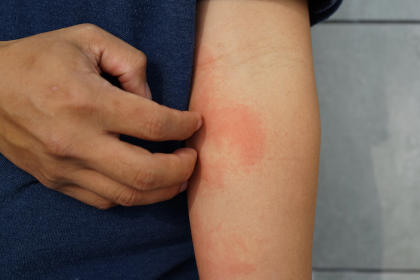
Common Side Effects
- Mild allergic reactions (rash, itching, or swelling)
- Injection-site bleeding
- Nosebleeds
Contact your healthcare provider if any side effect becomes severe or does not go away.
Severe Side Effects
Allergic reactions
This medicine may cause allergic reactions, including anaphylaxis. Anaphylaxis is a potentially fatal allergic reaction that causes difficulty breathing and low blood pressure.
Seek immediate medical care if you develop the following symptoms after receiving this medication:
- Rash and itching
- Hoarseness
- Breathing difficulty
- Trouble swallowing
- Swelling of your hands, face, or mouth
- Chest tightness
- Low blood pressure
Blood clots
Using Humate-P may increase the risk of potentially serious blood clots in patients with von Willebrand disease. Patients with known risk factors for blood clots and those undergoing surgery may be at a higher risk of developing blood clots.
Seek immediate medical attention if you develop symptoms of a blood clot, such as:
- Sudden chest pain
- Shortness of breath
- Swelling or pain in one leg
- Sudden weakness or numbness
- Difficulty speaking
Risks of infection transmission
See the Important Humate-P Warnings section above for more information about the small theoretical risk of transmitting infectious agents from plasma-derived products.
Speak to a Specialist
About Copay AssistanceHumate-P Cost
Cost can vary depending on your insurance plan, location, and pharmacy. Contact your insurance provider to find out whether your plan covers this medication or requires prior authorization.
CSL Behring GmbH, the manufacturer of Humate-P, offers financial support and helpful resources through its Co-Pay Assistance Program, CSL Behring AssuranceSM Program, and CSL Behring Patient Assistance Program.
Contact us if you are interested in financial or copay assistance for Humate-P.
Humate-P vs DDAVP
Although both Humate-P and DDAVP (desmopressin) are used to treat certain bleeding disorders, they work differently.
Humate-P replaces missing von Willebrand factor and factor VIII, making it appropriate for many patients with hemophilia A and all types of von Willebrand disease.
DDAVP works by stimulating the release of stored VWF and FVIII from the lining of blood vessels. It is commonly used for some patients with mild hemophilia A and certain types of von Willebrand disease but is not effective or appropriate for everyone. Your healthcare provider will determine which treatment is best based on your specific condition.