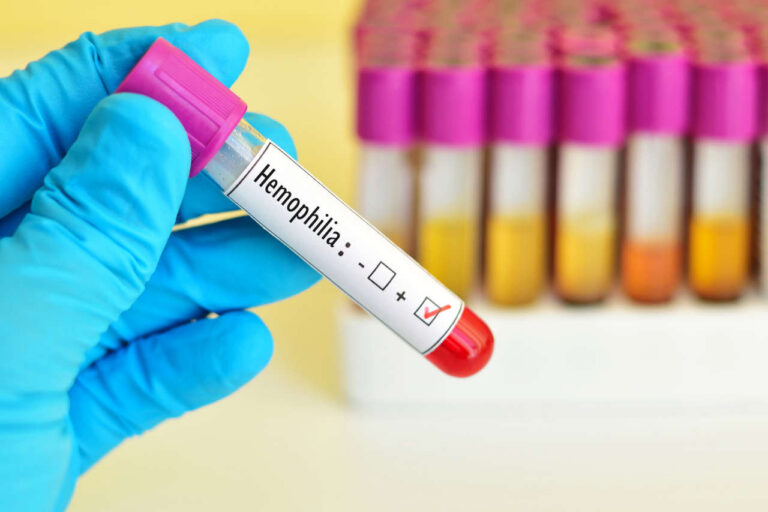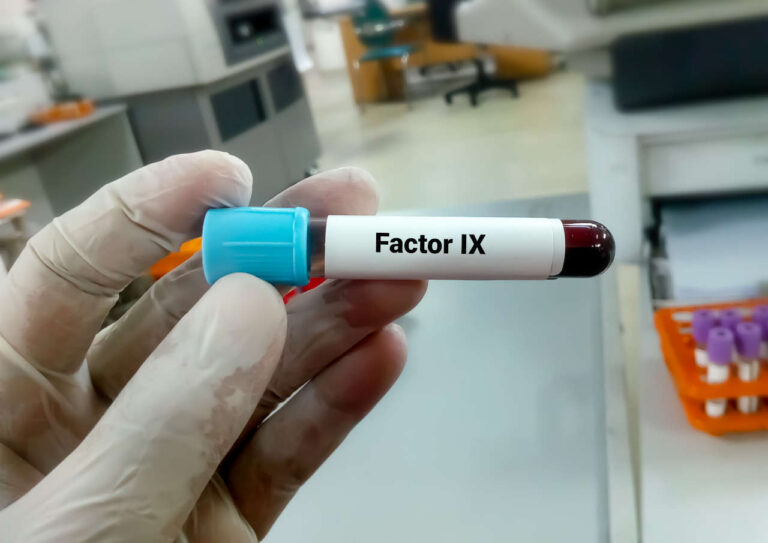




Xyntha is an FDA-approved prescription medication for adults and children with hemophilia A that replaces clotting factor VIII to help prevent and control bleeding. Hemophilia A (classic hemophilia) is an inherited bleeding disorder caused by a deficiency or dysfunction of clotting factor VIII.
Get Financial Assistance
Xyntha Introduction and Uses
Xyntha is a brand-name prescription product. The active ingredient in this product is recombinant antihemophilic factor (rAHF), which is also known as coagulation factor VIII or moroctocog alfa.
Xyntha belongs to a drug class called coagulation factors.
A healthcare provider may prescribe this medication for children and adults with hemophilia A to:
- Treat and control bleeding episodes as they occur
- Manage bleeding before, during, and after surgery
- Reduce the frequency of bleeding episodes through routine preventive treatment
Xyntha is not indicated for the treatment of von Willebrand disease (VWD).
Xyntha comes as a white to off-white powder in single-use vials. Each vial contains 250, 500, 1,000, or 2,000 International Units (IU) of the active drug.
Each Xyntha vial kit contains:
- 4 ml 0.9% Sodium Chloride with plunger rod for assembly
- One vial adapter
- One sterile infusion set
- Two alcohol swabs
- One bandage
- One gauze pad
- One package insert
The powder must be mixed with the sodium chloride solution before intravenous (IV) infusion.
Mechanism of Action
People with hemophilia A have deficient or dysfunctional clotting factor VIII. Factor VIII plays an important role in the blood-clotting process, and a deficiency can lead to prolonged or spontaneous bleeding, including bleeding into the joints and muscles.
Xyntha works by temporarily replacing the missing clotting factor VIII in the blood, helping the blood form clots and control bleeding.
Before Using Xyntha
Before you receive your first dose of Xyntha, inform your healthcare provider if you are:
- Allergic to Xyntha, any of its ingredients, or hamster proteins, which may be present in trace amounts
- Pregnant or planning to become pregnant
- Breastfeeding or planning to breastfeed
Important Xyntha Warnings
Allergic Reactions
This medicine may cause serious allergic reactions, including anaphylaxis. Anaphylaxis is a potentially life-threatening allergic reaction that can cause breathing problems, swelling, a rapid heartbeat, faintness, or low blood pressure.
Stop using this medication and seek immediate medical care if you develop the following symptoms after receiving Xyntha:
- Rash and itching
- Hoarseness
- Breathing difficulty
- Trouble swallowing
- Swelling of your hands, face, or mouth
- Chest tightness
- Low blood pressure
Get Copay Assistance Now
Factor VIII Inhibitor Development
Some people can develop antibodies called factor VIII inhibitors, which may reduce or prevent Xyntha from working effectively.
Your healthcare provider may order blood tests to check for factor VIII inhibitors if:
- Your factor VIII levels do not increase as expected after treatment
- Bleeding is not controlled with an appropriate dose
Dosing
Your healthcare provider will calculate your dose based on your body weight, desired increase in factor VIII activity, clinical response, and treatment needs. Always use the dose prescribed specifically for you.
The dose and duration of treatment depend on:
- The severity of the factor VIII deficiency
- The location and extent of bleeding
- The type of bleeding episode or surgery
- Your clinical condition and response to treatment
Dosing for On-Demand Treatment and Control of Bleeding Episodes
Minor bleeding: The dose is individualized to achieve a factor VIII activity level of approximately 20% to 40% of normal. Treatment may be repeated every 12 to 24 hours for at least 1 day, depending on the severity of bleeding.
Moderate bleeding: The dose is individualized to achieve a factor VIII activity level of approximately 30% to 60% of normal. Treatment may be repeated every 12 to 24 hours for 3 to 4 days or until bleeding is adequately controlled.
Major bleeding: The dose is individualized to achieve a factor VIII activity level of approximately 60% to 100% of normal. Treatment may be repeated every 8 to 24 hours until the bleeding is controlled.
Dosing for Preventing Bleeding During Surgery
Minor surgery: The dose is individualized to achieve a factor VIII activity level of approximately 30% to 60% of normal. Treatment may be repeated every 12 to 24 hours as directed by the healthcare provider.
Major surgery: The dose is individualized to achieve a factor VIII activity level of approximately 60% to 100% of normal. Treatment may be repeated every 8 to 14 hours until adequate wound healing is achieved.
Dosing for Routine Prevention of Bleeding Episodes
Recommended starting regimens include:
- Adults and adolescents 12 years or older: 30 IU/kg IV three times weekly
- Children younger than 12 years: 25 IU/kg IV every other day
Children younger than 12 may require higher or more frequent doses because the medication may be cleared from their bodies more quickly.
Your healthcare provider will adjust the dose or frequency based on your bleeding pattern, factor VIII levels, and clinical response.
Speak to a Specialist
About Copay AssistanceSide Effects
Common side effects reported with Xyntha include:

- Nausea, vomiting, diarrhea
- Headache
- Dizziness
- Joint pain
- Rash
- Sore throat
- Cough
- Stuffy nose
- Weakness
- Tiredness
- Fever
- Pain, swelling, or itching at the injection site
Serious risks of Xyntha include severe allergic reactions and the development of factor VIII inhibitors. Contact your healthcare provider if bleeding is not adequately controlled after receiving Xyntha or if you experience an increase in bleeding episodes. These may be signs that factor VIII inhibitors have developed.
Seek immediate medical attention if you experience symptoms of a serious allergic reaction, such as difficulty breathing, chest tightness, swelling of the face or mouth, or severe dizziness or fainting.
Xyntha Administration and Proper Use
Use Xyntha exactly as prescribed by your healthcare provider. You may receive your first dose in a hospital, clinic, or treatment center. If home treatment is appropriate, your healthcare provider will teach you how to prepare and administer the medication safely.
- Read and follow the Instructions for Use included with the product
- Wash your hands and work on a clean surface
- Allow the kit to reach room temperature
- Use only the supplies provided with Xyntha or recommended by your healthcare provider
- Inspect the reconstituted solution before infusion; it should be clear to slightly opalescent and colorless
- Do not use the solution if it contains particles or appears discolored
Contact your healthcare provider immediately if:
- Bleeding is not controlled after treatment
- You administer more than your prescribed dose
- You have difficulty preparing or infusing the medication
Before traveling, speak with your healthcare provider and bring enough medication and infusion supplies for the entire trip.
Xyntha Storage and Handling
- Store unopened Xyntha in a refrigerator at 2°C to 8°C (36°F to 46°F) for up to 36 months from the date of manufacture, but not beyond the labeled expiration date.
- Within the labeled expiration period, the medication may be stored at room temperature no higher than 25°C (77°F) for up to 3 months.
- Record the date room-temperature storage begins in the space provided on the carton.
- After 3 months at room temperature, use the medication immediately or discard it.
- Do not return the medication to the refrigerator after it has been stored at room temperature.
- Do not use the medication after its labeled expiration date or after 3 months at room temperature, whichever occurs first.
- Do not freeze Xyntha.
- Protect it from prolonged exposure to light.
- After reconstitution, keep the syringe upright at room temperature until use.
- Infuse the reconstituted solution within 3 hours after reconstitution or after removing the gray rubber tip cap.
- Discard the reconstituted solution if it has not been used within 3 hours.
Connect With a Copay Assistance Specialist
Cost and Financial Assistance
Cost can vary depending on your insurance plan, location, and pharmacy. Contact your insurance provider to find out if your plan covers this medication or if you need prior authorization. If cost is a concern, contact us to learn more about financial or copay assistance for Xyntha.