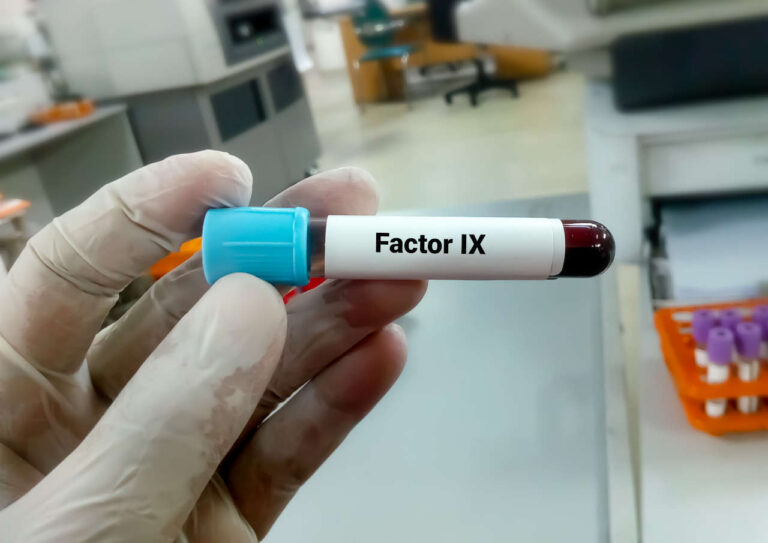




Profilnine SD (Factor IX complex) is a replacement therapy used to prevent and control bleeding in people with factor IX deficiency due to hemophilia B. Hemophilia B is an inherited bleeding disorder in which the body does not produce enough functional factor IX, a protein needed for normal blood clotting.
Get Copay Assistance Now
Profilnine SD is made from pooled human plasma and is administered intravenously (into a vein). It temporarily increases factor IX levels to help the blood clot properly and prevent or control excessive bleeding.
Profilnine SD is manufactured by Grifols Biologicals LLC and was originally approved by the FDA on July 20, 1981. In this article, we’ll discuss important information about Profilnine SD, including its uses, dosage, administration, side effects, warnings, and precautions.
Profilnine SD: Approved Uses
Profilnine SD is FDA-approved for the prevention and control of bleeding in people with factor IX deficiency due to hemophilia B.
Hemophilia B, sometimes called Christmas disease, is an inherited bleeding disorder caused by a deficiency or dysfunction of clotting factor IX. Without enough functional factor IX, the blood does not clot properly, which can cause prolonged or excessive bleeding.
Profilnine SD temporarily replaces deficient factor IX to help prevent or control bleeding.
Mode of Action
Profilnine SD contains clotting factor IX along with factors II and X and low levels of factor VII. In people with hemophilia B, Profilnine SD temporarily replaces deficient factor IX, increasing factor IX activity in the blood and helping the normal blood-clotting process occur.
The effects of factor IX replacement therapies are temporary, so additional doses may be necessary depending on the severity and location of bleeding, the desired factor IX level, and the patient’s response to treatment.
Profilnine SD: Drug Form
Profilnine SD is supplied as a sterile, freeze-dried (lyophilized) powder in single-dose vials containing approximately 500 IU, 1,000 IU, or 1,500 IU of factor IX. The medication must be reconstituted before intravenous administration.
Each vial is labeled with the actual factor IX potency expressed in International Units (IU). Follow the instructions provided with the medication and your healthcare provider’s directions when preparing and administering Profilnine SD.
Dosage and Administration
Profilnine SD is administered intravenously after reconstitution. The infusion rate should not exceed 10 ml per minute because administering the medication too rapidly may cause vasomotor reactions. The appropriate dose varies from person to person and should be determined by a healthcare provider.
The dose may depend on factors such as:
- Body weight
- Baseline factor IX level
- Desired factor IX level
- Location and severity of bleeding
- Individual response to treatment
- Whether treatment is needed around a surgical procedure
How Is the Profilnine SD Dose Calculated?
According to the prescribing information, approximately 1 unit of factor IX per kilogram of body weight can be expected to increase circulating factor IX levels by about 1%. However, individual responses may vary.
A healthcare provider may estimate the required dose using the following formula:
Body weight (kg) × desired increase in factor IX (%) × 1 unit/kg = factor IX units required
Factor IX levels should be monitored to help determine whether the desired level has been achieved and maintained.
Typical Dose of Profilnine SD for Hemophilia B
Factor IX dosing depends on bleeding severity. For minor to moderate bleeding, levels are raised to 20–30% every 16–24 hours, with treatment lasting 1–2 days for minor bleeds and 2–7 days for moderate ones.
For major bleeding, levels are first raised to 30–50%, then maintained at 20% until healing, typically over 3–10 days.
For surgery, levels are raised to 30–50% beforehand (up to 50% for dental extractions) and maintained until healing, usually 7–10 days, with doses given every 16–24 hours throughout. In short, more severe bleeding requires higher factor IX levels and longer treatment.
Connect With a Copay Assistance Specialist
Possible Side Effects
Like other medications, Profilnine SD can cause side effects. Possible adverse reactions include:

- Headache
- Fever
- Chills
- Flushing
- Nausea
- Vomiting
- Tingling
- Lethargy (lack of energy)
- Hives
Serious adverse reactions have also been reported with Profilnine SD. These may include:
- Severe allergic or hypersensitivity reactions, including anaphylaxis
- Abnormal blood clot formation (thrombosis), including deep vein thrombosis (DVT) and pulmonary embolism (PE)
- Disseminated intravascular coagulation (DIC), a serious condition that causes abnormal clotting throughout the body’s blood vessels
- Development of factor IX inhibitors, which can make factor IX replacement therapy less effective
Seek immediate medical attention if you develop symptoms of a severe allergic reaction or blood clot after receiving Profilnine SD.
Precautionary Measures
Before receiving Profilnine SD, tell your healthcare provider about your medical history and any medications you take. In particular, tell your healthcare provider if you:
- Have liver disease
- Have a history of blood clots
- Have recently had surgery or are scheduled to have surgery
- Are pregnant or planning to become pregnant
- Are breastfeeding
It is not known whether Profilnine SD can cause fetal harm when administered during pregnancy. Talk with your healthcare provider about the potential benefits and risks of treatment if you are pregnant or breastfeeding.
Do You Qualify for $0 Copay?
Speak With a Specialist and Find OutWarnings
Profilnine SD may increase the risk of thromboembolic complications (blood clots). The risk may be greater in certain people, including those undergoing or recovering from surgery and those with liver disease or other conditions that increase the risk of abnormal blood clotting.
Because Profilnine SD is made from human plasma, it carries a potential risk of transmitting infectious agents. Manufacturing processes, donor screening, and testing are used to substantially reduce this risk, but the possibility of transmitting infectious agents cannot be completely eliminated.
Some people may develop neutralizing antibodies, known as inhibitors, against factor IX. These inhibitors can make factor IX replacement therapy less effective. If Profilnine SD does not produce the expected factor IX levels or adequately control bleeding, your healthcare provider may perform blood tests to check for inhibitors.
Estimated Cost
Profilnine SD is a branded medication and can be relatively expensive. In the U.S., the estimated cash price can range from approximately $770 to $2,300 per vial, depending on the strength. These figures are estimates rather than fixed manufacturer prices, and you may pay less with insurance or eligible discount programs. Contact us if you are interested in financial assistance or copay assistance for Profilnine SD.
REFERENCES:
- US Food and Drug Administration (FDA). Profilnine SD (Factor IX Complex) Prescribing Information: https://www.fda.gov/media/80956/download?attachment
- DailyMed – PROFILNINE- Factor IX Complex Kit. https://dailymed.nlm.nih.gov/dailymed/drugInfo.cfm?setid=79821042-86a5-4a64-b621-76de0a0bbab2
- Ashikhmina, E., Said, S., Smith, M. M., Rodriguez, V., Oliver, W. C., Nuttall, G. A., Dearani, J. A., & Schaff, H. V. (2017). Prothrombin Complex Concentrates in Pediatric Cardiac Surgery: The Current State and the Future. The Annals of Thoracic Surgery, 104(4), 1423-1431. https://doi.org/10.1016/j.athoracsur.2017.04.009