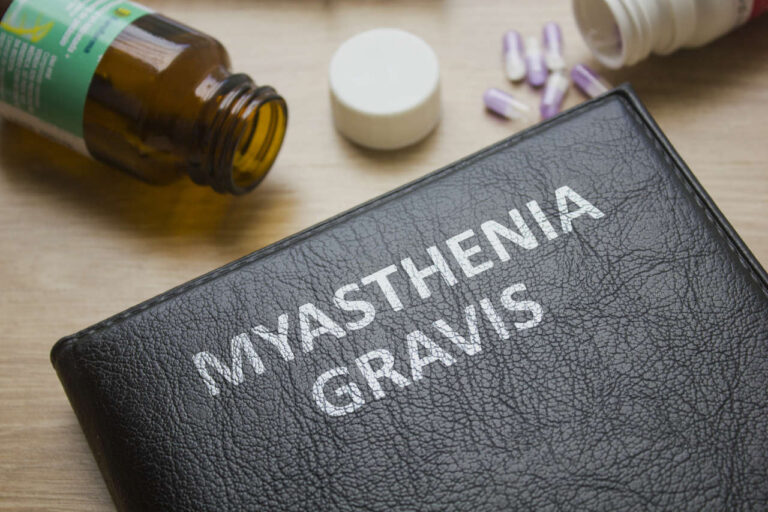




If you or someone you love has been diagnosed with myasthenia gravis (MG), you may have many questions, especially about treatment and vaccines. Should you get vaccinated? Are vaccines safe for you? Can vaccines worsen MG symptoms?
Get Financial Assistance
These concerns are valid. Infections are dangerous for people with MG. Some infections can even lead to serious complications such as myasthenic crisis, a condition in which people with MG may be unable to breathe on their own and require respiratory support. Vaccines can protect MG patients from infections. However, some vaccines can be unsafe if you take certain medications.
In this article, we’ll explore everything you need to know about myasthenia gravis and vaccines, including which ones are safe, which ones require caution, and when you should take them.
What Is Myasthenia Gravis?
Myasthenia gravis (MG) is a long-term autoimmune disease that affects the communication between nerves and muscles. It causes muscle weakness that typically worsens with activity and improves with rest. Common symptoms of MG include [1]:
- Droopy eyelids
- Double vision
- Slurred speech and difficulty swallowing
- Shortness of breath
- Weakness in the arms, legs, and neck
Normally, your immune system protects you from diseases by attacking foreign pathogens like viruses and bacteria. However, in some cases, the immune system mistakenly attacks the body’s own tissues and organs. Myasthenia gravis occurs when the immune system mistakenly attacks the receptors involved in muscle activation.
As the immune system is involved, most MG treatments work by suppressing the immune system. This is where the discussion related to vaccines becomes important. While vaccines help protect against infections, certain live vaccines may not be safe for MG patients taking immunosuppressive medicines.
What Are Vaccines and Why Do They Matter for People With MG
A vaccine is a medical product that trains your immune system to recognize and fight diseases. Vaccines contain weakened, inactive, or modified parts of germs called antigens. These antigens help the body develop immunity without causing the actual disease [2].
Infections are more dangerous for myasthenia gravis (MG) patients, especially if they are taking immunosuppressive medications such as prednisone, azathioprine, rituximab, or tacrolimus. Even a common viral infection can worsen muscle weakness. Furthermore, respiratory infections are especially concerning because MG can weaken the muscles involved in breathing. Fortunately, vaccines can lower the risk of serious infections such as:
- Influenza (flu)
- Pneumococcal pneumonia
- Shingles
- Meningococcal disease
- Hepatitis B
However, certain live vaccines may not be safe for MG patients who take immunosuppressive medicines. Despite this, most experts believe the benefits of vaccination usually outweigh the small risk of temporary worsening of symptoms [3].
Speak to a Specialist
About Copay AssistanceRecommended Vaccines for Myasthenia Gravis Patients
Generally, vaccination reduces your risk of developing certain infections. If your treatment plan includes immunosuppressive drugs, consult your doctor about the safety and necessity of vaccines. They can tell you which vaccines you should take and what the side effects will be.
Here are some vaccines that are generally considered safe and recommended for many people with MG, including those taking immunosuppressive medications:
Influenza Vaccine: An influenza (flu) infection can cause serious respiratory complications and may trigger MG flare-ups. That’s why the annual flu shot is commonly recommended for people with MG. However, the injectable flu shot is preferred over the nasal spray flu vaccine because it is an inactivated vaccine [3].
Pneumococcal Vaccines: These vaccines help protect against pneumonia and other serious infections caused by Streptococcus pneumoniae. These vaccines are especially important for older adults and immunocompromised patients. The CDC recommends that you take the pneumococcal vaccination if you are on immunosuppressive medicines [4].
Shingles Vaccine: Shingles can be particularly severe in MG patients who take immunosuppressive medications. The recombinant shingles vaccine is generally recommended and considered safe for people with MG [3].
Tdap Vaccine: The tetanus, diphtheria, and pertussis (Tdap) vaccine is essential for adults with MG [5].
Hepatitis B: This vaccine is recommended for MG patients who are at risk.
Human papillomavirus (HPV): The inactivated HPV vaccines are recommended for MG patients. They protect you against HPV-related cancers [5].
COVID-19 Vaccines: COVID-19 infection can worsen MG symptoms and increase the risk of serious complications. Current evidence suggests that COVID-19 vaccines are generally safe for most people with stable MG and are commonly recommended by healthcare providers.
Vaccines That Require Extra Caution

Live vaccines contain weakened versions of viruses and bacteria. These vaccines may pose a risk for people with MG who are taking immunosuppressive medications as infections could occur. Some examples of such live vaccines include:
- MMR (measles, mumps, rubella) vaccine
- Nasal flu spray
- Rotavirus
- Smallpox
- Yellow fever vaccine
- Varicella (chickenpox) vaccine
In general, people with MG who are taking immunosuppressive medications should avoid live vaccines unless approved by their healthcare provider [3].
Special Considerations for Meningococcal Vaccine
Some newer treatments for MG, such as Eculizumab and Ravulizumab, work by blocking a part of the immune system called the complement pathway. Although these medications can effectively control MG symptoms, they also increase the risk of serious meningococcal infections. Because of this, it is recommended to take meningococcal vaccines at least 2 weeks before starting treatment with these medicines.
Your doctor may recommend both MenACWY and MenB vaccines for broader protection [5]. However, vaccines do not completely remove the risk of meningococcal infections. That’s why you should always watch for symptoms such as fever, headache, neck stiffness, or rash. Seek immediate medical attention if you develop these symptoms.
Get Copay Assistance Now
Can Vaccines Trigger Myasthenia Gravis (MG)?
There have been rare reports linking vaccines to new-onset MG or temporary worsening of symptoms. Some cases have been reported after hepatitis B and COVID-19 vaccines [6,7,8]. However, these cases appear to be very uncommon.
Current evidence suggests that the overall benefits of vaccination are much greater than the potential risks for most people with MG [9].
Overall, the available data support routine vaccination for stable MG patients. Consult your doctor to ensure the safest and most effective approach.
Talking to Your Doctor About Vaccination
Every case of myasthenia gravis (MG) is different. That’s why you need personalized medical guidance. During your next appointment, consider asking your doctor these important questions about vaccination:
- Which vaccines do I need based on my current medical condition?
- Are there any vaccines I should avoid?
- Is there an ideal time in my treatment cycle to get vaccinated?
- Should I adjust any medications around the time of vaccination?
- What symptoms should I watch for after vaccination?
You should be proactive and informed. This will put you in the best position to make safer and smarter decisions.
The Bottom Line
Vaccines are an important tool to protect people with myasthenia gravis (MG) from infections. Although extra caution may be needed with live vaccines, especially for people taking immunosuppressive medications, most non-live vaccines are considered safe and beneficial.
For most MG patients, the risk posed by infections is far greater than the risk associated with vaccinations [9]. Working closely with your neurologist and healthcare team can help ensure that vaccines are given safely and at the right time.
REFERENCES:
- Harvard Health. (2024, February 18). Myasthenia gravis. https://www.health.harvard.edu/a_to_z/myasthenia-gravis-a-to-z
- Vaccines. (2024, February 14). Johns Hopkins Medicine. https://www.hopkinsmedicine.org/health/treatment-tests-and-therapies/vaccines
- Myasthenia Gravis Foundation of America. (2026, April 2). General MG Management | Myasthenia Gravis Foundation of America. https://myasthenia.org/living-with-mg/after-your-diagnosis/general-mg-management/
- Altered immunocompetence. (2024, June 26). Vaccines & Immunizations. https://www.cdc.gov/vaccines/hcp/imz-best-practices/altered-immunocompetence.html
- Myasthenia-Gravis.com. (2025, July 15). Vaccinations and myasthenia gravis: current recommendations. Myasthenia-Gravis.com. https://myasthenia-gravis.com/hcp/vaccinations-and-myasthenia-gravis-current-recommendations
- Özenç, B., & Odabaşı, Z. (2022). New-Onset myasthenia gravis following COVID-19 vaccination. Annals of Indian Academy of Neurology, 25(6), 1224–1225. https://doi.org/10.4103/aian.aian_470_22
- Papadopoulou, M., Stefanou, M., Palaiodimou, L., & Tsivgoulis, G. (2023). Myasthenia gravis exacerbation following immunization with the BNT162B2 mRNA COVID-19 vaccine: Report of a case and review of the literature. The Neurohospitalist, 13(3), 303–307. https://doi.org/10.1177/19418744231158161
- Bahri, M., Louzir, B., Othmani, S., Battikh, R., & Bahri, M. (2001). FRI0248 Myasthenia gravis after hepatitis b vaccine. report of one case. Annals of the Rheumatic Diseases, 60, A226–A227. https://doi.org/10.1136/annrheumdis-2001.569
- Sansone, G., & Bonifati, D. M. (2022). Vaccines and myasthenia gravis: a comprehensive review and retrospective study of SARS-CoV-2 vaccination in a large cohort of myasthenic patients. Journal of Neurology, 269(8), 3965–3981. https://doi.org/10.1007/s00415-022-11140-9