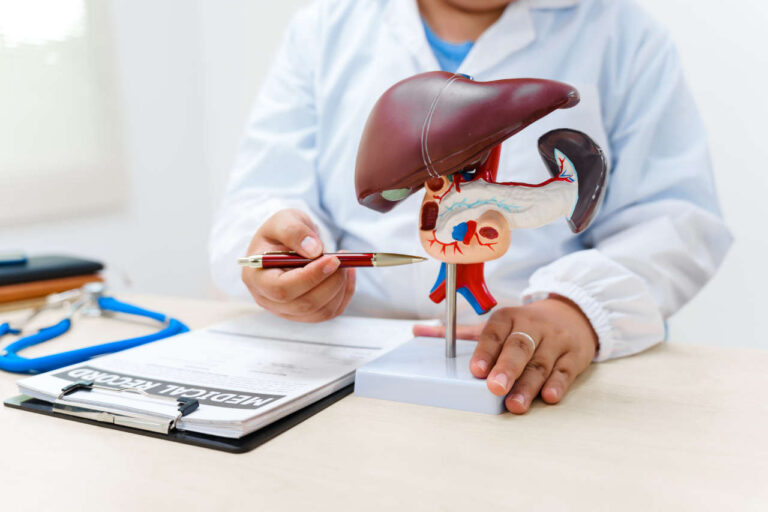




Unintentional weight loss can have many causes, including cancer. In fact, unintentional weight loss is more commonly seen in people who are eventually diagnosed with cancer. Losing more than 5% of your body weight within 6–12 months without trying should be evaluated by a healthcare provider.
Do You Qualify for $0 Copay?
Talk to a Specialist To Find OutWhile not all cancers cause weight loss, cancers of the stomach or pancreas can cause early, rapid weight loss. Per Cancer Research UK, 80% of people with pancreatic, esophageal, or stomach cancer, and 60% of people with lung cancer, lost a significant amount of weight by the time of their diagnosis.
Understanding why weight loss occurs and how to manage it is an important part of cancer care. Read on to learn everything you need to know about cancer and weight loss.
What Is Unintentional Weight Loss and Can It Be a Sign of Cancer?
Unintentional weight loss refers to losing weight without dieting or exercising. Clinically, a loss of more than 5% of your body weight in a year without trying or a loss of more than 3 pounds in a week can be a sign of a serious problem, especially in cases of cancer.
According to a study, around 31 to 87 percent of people with cancer reported unintentional weight loss.
Moreover, many people with cancer can lose weight due to several other factors, like loss of appetite, side effects of cancer treatments, or other underlying health problems.
Why Does Cancer Cause Weight Loss?
Many people with cancer lose weight because the cancer changes how the body uses energy. As the cancer cells grow and divide rapidly, they use a large amount of energy. In addition, cancer releases certain chemicals (i.e., cytokines) that increase inflammation and alter normal metabolism.
These inflammatory cytokines increase the metabolic rate and make the body use more energy than normal. When this happens, the body starts breaking down stored fat and muscle to meet its energy needs. Over time, this leads to weight loss.
Clinically, this type of cancer-related weight loss is called cancer cachexia. People with cancer cachexia often expend more energy than they consume and experience metabolic changes that promote muscle and fat loss.
Cancer cachexia affects 50% of people with cancer and is particularly common in advanced stages, affecting up to 75% of people with late-stage (stage IV) cancer. Symptoms may include unintentional weight loss, fatigue and weakness, reduced appetite, anemia, and frequent infections.
Factors Contributing to Weight Loss in Cancer
Other than cancer-related metabolic changes, there are several other factors that may contribute to weight loss when you have cancer.
1. Loss of Appetite
Many people with cancer often lose their appetite or feel full only after eating a small meal. Loss of appetite can occur for several reasons, such as inflammation, changes in appetite-regulating hormones, or psychological concerns related to illness, like depression, nausea, stress, or pain. The reduced food intake due to these causes naturally leads to weight loss over time.
2. Tumor Location
In some cases, people with stomach, esophagus, small bowel, or pancreatic cancer have difficulty eating or digesting food properly. Tumors in these locations interfere with swallowing, digestion, or nutrient absorption.
Even if a person eats, nutrients may not be fully absorbed or utilized by the body, leading to rapid weight loss as the body starts to break down stored muscle and fat to obtain energy.
Get Financial Assistance
3. Side Effects of Cancer Treatments
Surgery and cancer treatments like radiation and chemotherapy, and opioids, can contribute to weight loss by causing side effects like nausea, vomiting, diarrhea, constipation, mouth sores, or taste changes.
These side effects usually reduce appetite and food intake and make it harder for cancer patients to maintain weight during the treatment.
Cancers Most Commonly Associated With Weight Loss
Depending on the tumor type, weight loss can occur in 30 to 80% of cancer patients. Patients with upper gastrointestinal cancers (especially pancreatic or gastric cancers) are more likely to experience weight loss compared with those who have breast cancer, sarcomas, thyroid cancer, non-Hodgkin’s lymphoma, or prostate cancer.
Moreover, because organs in the upper gastrointestinal tract are directly involved in eating, swallowing, digestion, or metabolism, tumors in these areas can significantly affect body weight. In addition, some other cancers (e.g., lung cancer) can also lead to weight loss due to metabolic changes in the body.
Below are some types of cancers that may contribute to weight loss in both early and advanced stages:
- Pancreatic cancer
- Stomach (gastric) cancer
- Esophagus cancer
- Head and neck cancer
- Colorectal cancer
Not everyone with these cancers will experience weight loss. If you notice unexplained weight changes or any other concerning symptoms, it is best to consult your healthcare provider for proper evaluation and diagnosis.
Managing and Treating Cancer-Related Weight Loss
Good nutrition, exercise, and medications can help manage cancer-related weight loss (cachexia).
1. Nutritional Support

Nutrition plays an important role in cancer care and recovery. Your healthcare provider may advise you to:
- Eat small, frequent meals every 2 to 3 hours (about 5 or 6 per day).
- Eat high-protein and high-calorie foods such as avocados, peanut butter, nuts, and yogurt.
- Include healthy fats such as nuts, seeds, and oils
- Add whole milk to hot or cold cereal.
- Drink milkshakes, smoothies, juices, or soups if you do not feel like eating solid foods.
- Use whole milk or yogurt for milkshakes or smoothies to increase calories.
- Sip on nutrition supplement drinks (e.g., Ensure and Boost) between meals.
- Stay well hydrated
If you have difficulty chewing or swallowing, or if your gastrointestinal system is not working or cannot be used, you may receive enteral feeding or intravenous (IV) nutrient therapy. These therapies help to fulfill the body’s nutritional requirements.
Speak to a Specialist
About Copay Assistance2. Exercise
Just like nutrition, light physical activity, such as walking or stretching, can help you maintain muscle mass and improve appetite.
3. Medications
Your healthcare provider may prescribe some medications based on the cause of your weight loss. For instance, if you’re experiencing cancer treatment-related side effects like reduced appetite, nausea, or vomiting, your healthcare provider or registered nurse may recommend the following medicines:
- Appetite stimulants (megestrol acetate, corticosteroids) to increase appetite and weight gain
- Metoclopramide or dronabinol to ease nausea and vomiting
These medications are not appropriate for everyone and should only be used under the supervision of an oncology healthcare provider.
When Should You See a Healthcare Provider?
Contact your healthcare provider if you:
- Lose more than 5% of your body weight without trying
- Experience persistent loss of appetite
- Have difficulty swallowing
- Notice ongoing nausea, vomiting, or digestive problems
- Develop unexplained fatigue along with weight loss
Key Takeaway
Your weight can fluctuate for various reasons. But rapid or unintentional weight loss without trying could be a sign of developing cancer. Some cancers, such as pancreatic, esophageal, lung, and stomach cancers, may cause weight loss in their early stages, even before other symptoms become noticeable. Therefore, it is important to always consult your healthcare provider for a thorough evaluation, as it could help diagnose the cancer earlier when there’s a chance for more effective treatment.
REFERENCES:
- Yuen, E. Y. N., Zaleta, A. K., McManus, S., Buzaglo, J. S., LeBlanc, T. W., Hamilton, K., & Stein, K. (2019). Unintentional weight loss, its associated burden, and perceived weight status in people with cancer. Supportive Care in Cancer, 28(1), 329–339. https://doi.org/10.1007/s00520-019-04797-y
- Wang, Q., Babic, A., Rosenthal, M. H., Lee, A. A., Zhang, Y., Zhang, X., Song, M., Rezende, L. F. M., Lee, D. H., Biller, L., Ng, K., Giannakis, M., Chan, A. T., Meyerhardt, J. A., Fuchs, C. S., Eliassen, A. H., Birmann, B. M., Stampfer, M. J., Giovannucci, E. L., . . . Wolpin, B. M. (2024). Cancer diagnoses after recent weight loss. JAMA, 331(4), 318. https://doi.org/10.1001/jama.2023.25869
- Dhanapal, R., Saraswathi, T., & Govind, R. N. (2011). Cancer cachexia. Journal of Oral and Maxillofacial Pathology, 15(3), 257–260. https://doi.org/10.4103/0973-029x.86670
- Weight changes and cancer – side effects. (2024, October 15). Cancer.gov. https://www.cancer.gov/about-cancer/treatment/side-effects/appetite-loss
- Fearon, K., Strasser, F., Anker, S. D., Bosaeus, I., Bruera, E., Fainsinger, R. L., Jatoi, A., Loprinzi, C., MacDonald, N., Mantovani, G., Davis, M., Muscaritoli, M., Ottery, F., Radbruch, L., Ravasco, P., Walsh, D., Wilcock, A., Kaasa, S., & Baracos, V. E. (2011). Definition and classification of cancer cachexia: an international consensus. The Lancet Oncology, 12(5), 489–495. https://doi.org/10.1016/s1470-2045(10)70218-7
- Nutrition during cancer. (2024, October 15). Cancer.gov. https://www.cancer.gov/about-cancer/treatment/side-effects/nutrition
- Zhang, G., Zhang, C., Fida, S., Guo, Z., Cui, J., Li, W., Weng, M., Wang, K., Li, S., Shi, H., Xu, H., & Song, C. (2025). Impact of weight change on the prognosis of cancer patients: A multicenter, prospective study. Clinical Nutrition ESPEN, 70, 69-76. https://doi.org/10.1016/j.clnesp.2025.09.011