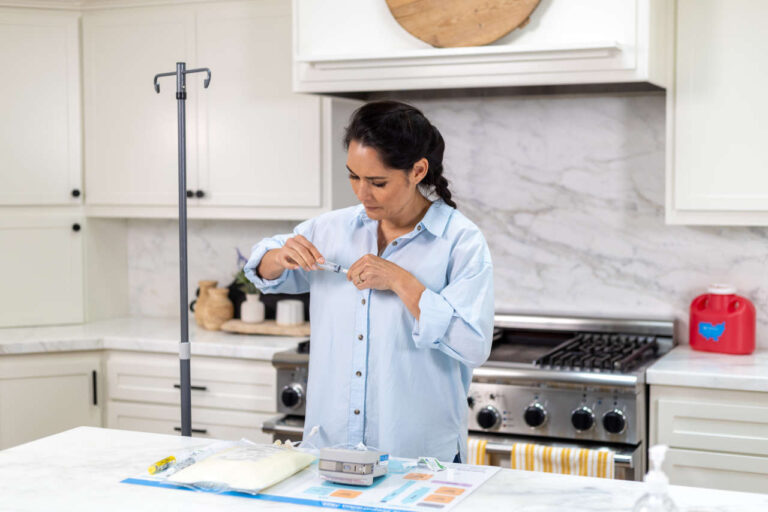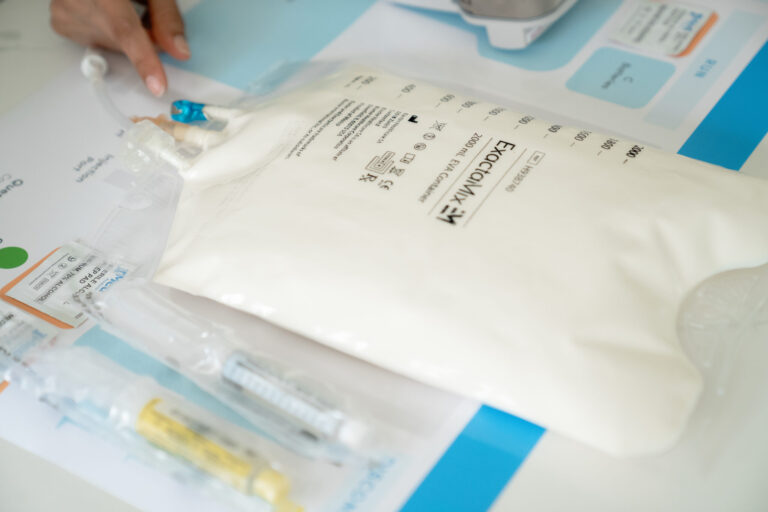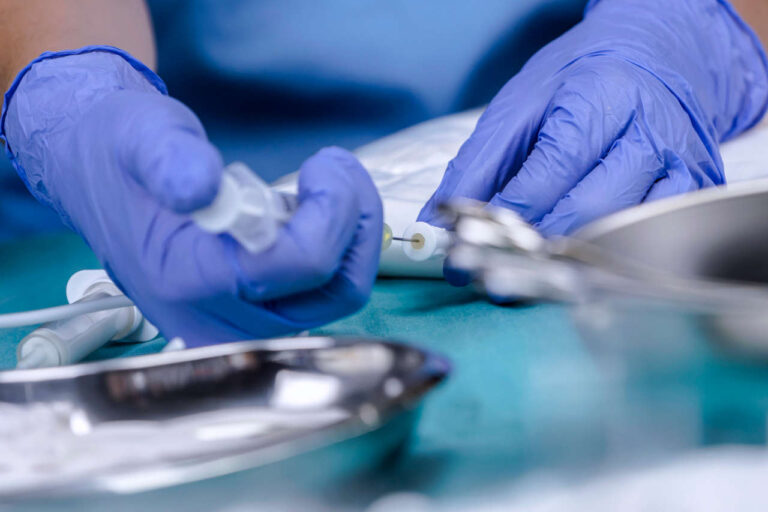



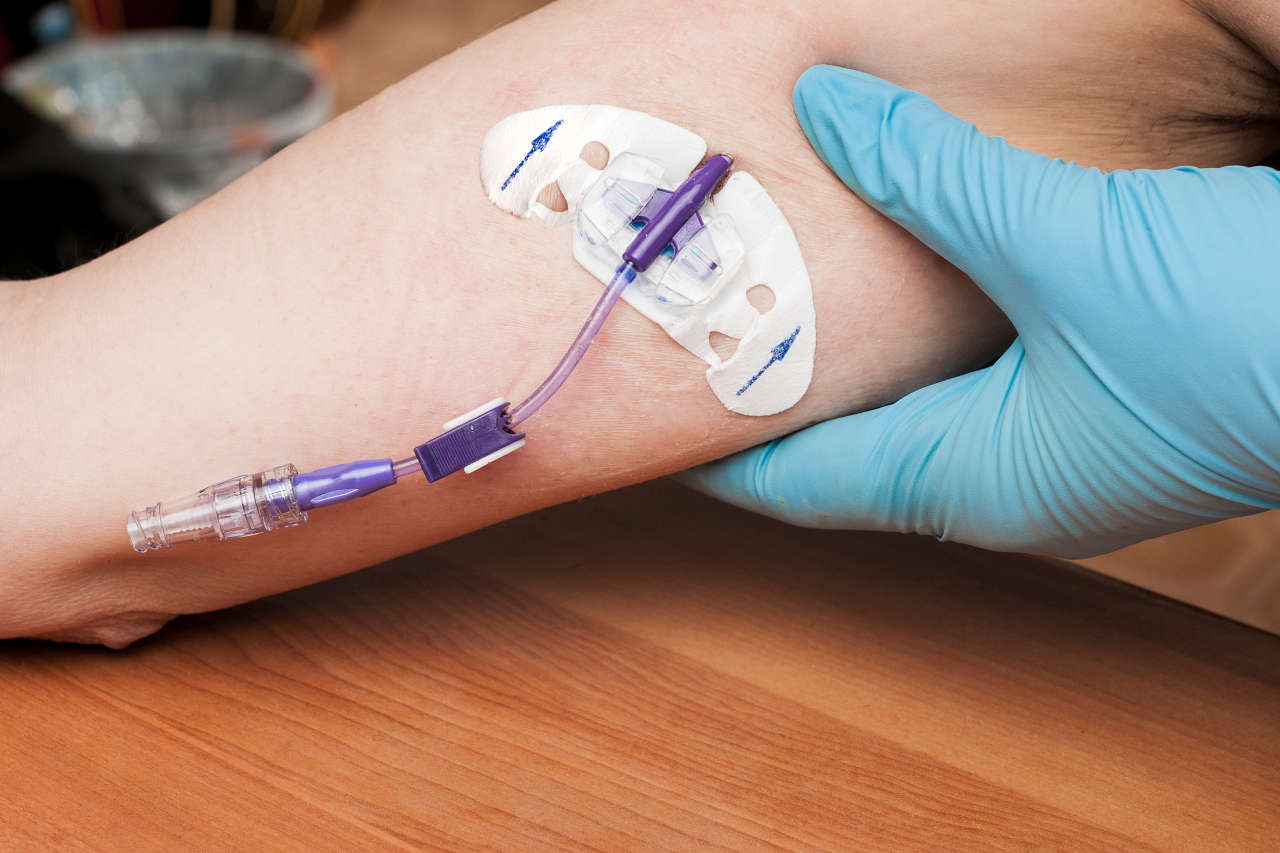
If your TPN (total parenteral nutrition) therapy is expected to last up to several weeks, such as 2 to 6 weeks, you will likely get a PICC line placed instead of a regular IV line.
Your IV Fluids, Always Available
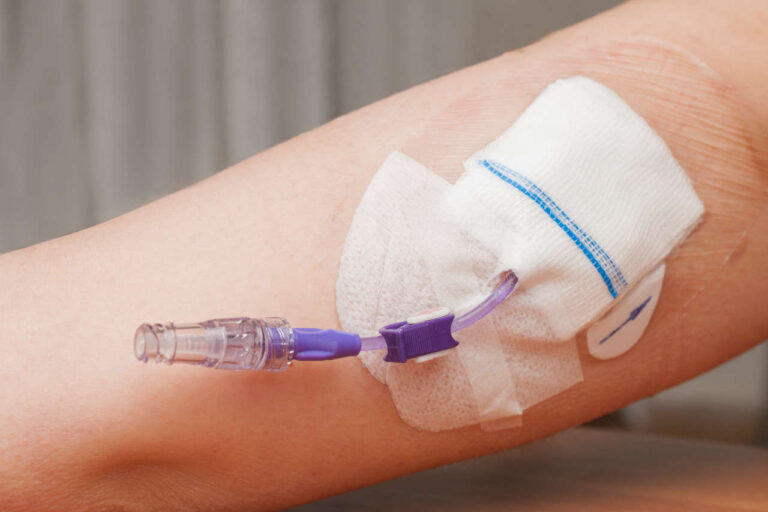
Full inventory, hassle-free accessA PICC line, also known as a peripherally inserted central catheter, is a long, super thin, flexible tube (catheter) that is inserted into one of the peripheral veins (such as the basilic or cephalic vein) of your upper arm. The tube is then advanced through a larger blood vessel, such as the subclavian vein, toward the superior vena cava, a large vein that carries blood to the right side of the heart.
A PICC line is typically placed by a trained and qualified healthcare professional, such as a registered nurse, physician assistant, physician, or other appropriately credentialed clinician, using sterile technique.
Before receiving TPN through a PICC line, it is important to understand why a PICC may be selected for parenteral nutrition, how the line is placed, and the potential risks and complications that may occur during treatment or after placement.
Why Is the PICC Line Used for TPN Therapy Instead of Regular IVs or Other Central Lines?
There are a number of reasons that healthcare providers consider providing TPN infusion through a PICC line instead of regular intravenous lines or central lines:
It Provides Long-Term Access
The PICC line is designed to stay in place for several weeks or even months. This long-term access makes it easier for patients to receive TPN therapy for up to a few months without frequent reinsertion.
Furthermore, unlike a regular intravenous (IV) line, which is shorter, the PICC line is a super-thin, long tube that provides easy access to a larger vein near the heart.
It Reduces Discomfort
The PICC line reduces the discomfort caused by repeated needle sticks with general IV lines and can deliver various types of IV fluids for TPN, which might not be possible through regular IV lines.
It Can Be Cost-Effective
PICC lines are widely used for long-term intravenous therapy and may be a cost-effective option in certain situations. However, like other central venous catheters, PICC lines carry risks such as bloodstream infection and thrombosis, and their risks and costs vary depending on the patient, type of vascular access, and duration of treatment.
How Is TPN Given Through the PICC Line?
To provide TPN infusion through a PICC line, the ordering physician will make arrangements to have the PICC inserted.
PICC Line Placement Procedure
PICC line placement typically takes about 30 to 60 minutes and is performed in a procedure room or other appropriate clinical setting. Ultrasound is commonly used to guide insertion, and imaging or other methods may be used to confirm the catheter tip’s position.
To place a PICC line, a trained healthcare professional typically performs the following steps:
- Clean the insertion site and inject the numbing agent, such as 1% lidocaine, at the selected insertion site. The numbing agent reduces possible pain and discomfort during the procedure.
- Once the numbing agent takes effect, a special IV needle will be placed into the selected vein.
- The PICC line is gently threaded through the needle and into the major blood vessels and advanced toward the heart.
- An ultrasound machine may be used to track the catheter tip until it reaches the proper position in the superior vena cava.
- A chest X-ray will be performed to ensure the PICC line is correctly positioned.
- Once the line is confirmed with an X-ray, the PICC line will be secured with a special dressing. Sometimes PICC lines are secured with stitches.
- A PICC line may have one, two, or three lumens, which are small tubes from the PICC placement site. These lumens/tubes are separate channels within the catheter. Depending on the prescribed treatment, one or more lumens may be used to administer TPN and other medications or fluids. One lumen may be assigned for blood draws.
Infusion of TPN Through PICC Line
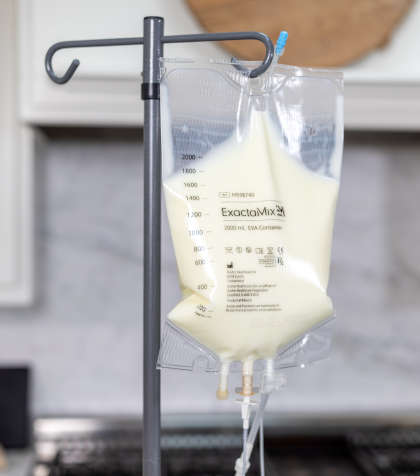
Once the insertion is successfully completed, the pharmacy team will receive orders to begin the TPN infusion. To learn how to start the TPN infusion process, read our article: A Complete Step-by-Step Guide To Administering TPN.
Ask About TPN Home Infusion
How Do You Care for and Maintain Your PICC Line After the TPN Infusion?
The new PICC line requires daily care, even when TPN is not being administered. Always follow the instructions provided by your healthcare team in order to help maintain catheter function and reduce the risk of infection and other complications.
- Always flush and lock the PICC line with saline solution after TPN infusion. Certain PICC lines will also need heparin solution. Your healthcare provider or nurse will give you directions about cleaning and flushing the line to prevent blockage.
- Check your insertion site daily for signs of infection, swelling, or redness. If you see redness or feel pain around the insertion site, consult your healthcare provider immediately.
- Avoid lifting heavy weights, as doing so can affect your line.
- Do not use the affected arm to check blood pressure.
- Cover your PICC line with plastic wrap or a waterproof bandage when taking a shower.
- Do not change the dressing of your PICC line by yourself. The PICC line dressing procedure is best performed by a trained healthcare provider at least once per week and as needed if the dressing becomes soiled or complications occur.
Are There Any Risks Associated With TPN Given Through a PICC Line?
No particular risks are associated with TPN given through a PICC line compared to other modes of TPN delivery, as long as the line is secured and maintained properly. However, the PICC line can sometimes become clogged with medication or blood clots if not flushed properly after the TPN infusion.
If the line gets clogged, the TPN fluid may not flow smoothly. This is evident when the PICC line will not flush smoothly, is blocked, or when there are frequent infusion pump alarms. The infusion nurse will troubleshoot the PICC line. Sometimes medication to remove a blood clot is warranted in order to restore PICC line patency. Depending on the cause and severity of the problem, the PICC line may need to be removed and, if continued central venous access is necessary, replaced with a new catheter.
When To Consult Your Healthcare Provider
Consult your healthcare provider immediately if:
- You have a high fever or experience shortness of breath, itching, or dizziness.
- Your line won’t flush or is blocked.
- Your PICC line is leaking.
- You have bleeding from the PICC line site.
- Your PICC line accidentally comes out.
- Your PICC line dressing becomes loose or dirty.
REFERENCES:
- Johansson, E., Hammarskjöld, F., Lundberg, D., & Arnlind, M. H. (2013). Advantages and disadvantages of peripherally inserted central venous catheters (PICC) compared to other central venous lines: a systematic review of the literature. Acta oncologica, 52(5), 886-892. https://doi.org/10.3109/0284186X.2013.773072
- Comas, M., Domingo, L., Jansana, A., Lafuente, E., Civit, A., García-Pérez, L., … & Castells, X. (2022). Cost-effectiveness analysis of peripherally inserted central catheters versus central venous catheters for in-hospital parenteral nutrition. Journal of Patient Safety, 18(7), e1109-e1115. DOI: 10.1097/PTS.0000000000001028