


Nerves transmit signals between the brain, spinal cord, and the rest of the body, enabling functions such as thinking, movement, sensation, and vision.
Get IVIG Prior Authorization
Many nerves are myelinated. Myelin is a type of material that acts as an insulator in the nervous system. When the myelin sheath is damaged through a process known as demyelination, nerve signals slow down or become disrupted, leading to neurological symptoms.
Demyelination can occur in the brain, spinal cord, or peripheral nerves, and it is associated with a wide range of medical conditions. Multiple sclerosis (MS) is the most common demyelinating disease in the United States.
Treatment depends on the underlying cause and may involve several medical approaches, such as imaging or specialized tests.
What Is Demyelination Caused By?
Myelin sheaths surround peripheral nerves as well as nerves in the brain, spinal cord, and eyes, providing protection to these nerves and allowing them to communicate effectively. Symptoms of demyelination appear as a result of myelin depletion.
Neurological deficits occur when the myelin sheath is damaged or lost, impairing normal nerve function.
The most common cause of myelin damage is inflammation. Additional causes include:
- Physical compression
- Loss of oxygen
- Metabolic problems
- Certain viral infections
Infections
In many cases, the immune system mistakenly identifies myelin as a foreign substance and attacks it. This is often triggered by autoimmune conditions or infections.
Toxins and infections can also cause myelin damage or prevent it from being produced. Some nutritional deficiencies can result in a lack of myelin formation as well.
Toxin Exposure
Myelin damage can be caused by medications and toxin exposures, which can be either temporary or permanent. Identifying the exact toxin responsible can be challenging. Once the causative agent has been identified, the key to recovery is to keep exposure to a bare minimum.
Copper Deficiency
Low copper levels caused by previous gastric surgery, excessive zinc intake, or malabsorption, similar to vitamin B12 deficiency, can have an effect on the spinal cord and peripheral nerves.
Copper is important as it can help repair or sustain myelin. A copper deficiency can contribute to neurological dysfunction and may lead to demyelination in some cases, particularly affecting the spinal cord.
Vitamin B12 Deficiency
Vitamin B12 has a variety of functions in the body, including assisting in the production of myelin, which is essential for nerve cell function. A vitamin B12 deficiency can result in demyelinating disease of the spine as well as peripheral neuropathy in the affected area.
Hypoxia
Necrosis of the brain is most often caused by a lack of oxygen, which can be caused by a cardiac arrest or by depressed breathing. Demyelination can be observed on rare occasions. The extent of the damage determines the likelihood of recovery.
Get IVIG Copay Assistance
Speak to a SpecialistDiagnosis
Demyelination is diagnosed using a combination of clinical evaluation and specialized tests. The medical history and physical examination will frequently reveal whether the brain, spine, optic nerves, or peripheral nerves are involved in the condition being investigated. It may take some time to determine the type and cause of demyelination and the specific illness.
Clinical Examination
The duration of your symptoms, whether they have occurred previously, and whether you have recently been sick with an infection will all be discussed with your healthcare provider when you are being evaluated for a demyelinating illness.
Your healthcare provider will almost certainly inquire about any other symptoms you are experiencing, such as pain, nausea, vomiting, or fever. In addition to any previous illnesses you’ve experienced, your medical team will be interested in learning about your family’s medical history.
A physical examination will assess your muscle strength and sensation as well as your coordination, balance, and ability to walk on a treadmill. An examination of your vision, as well as the way your pupils respond to light, may also be performed by a healthcare provider.
Your healthcare provider may recommend that you undergo an ophthalmologic examination, during which they will examine the inside of your eyes with an ophthalmoscope to determine whether you have optic neuritis (inflammation and demyelination of the optic nerve).
Magnetic Resonance Imaging
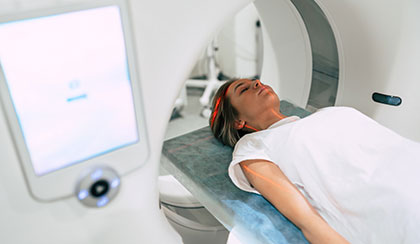
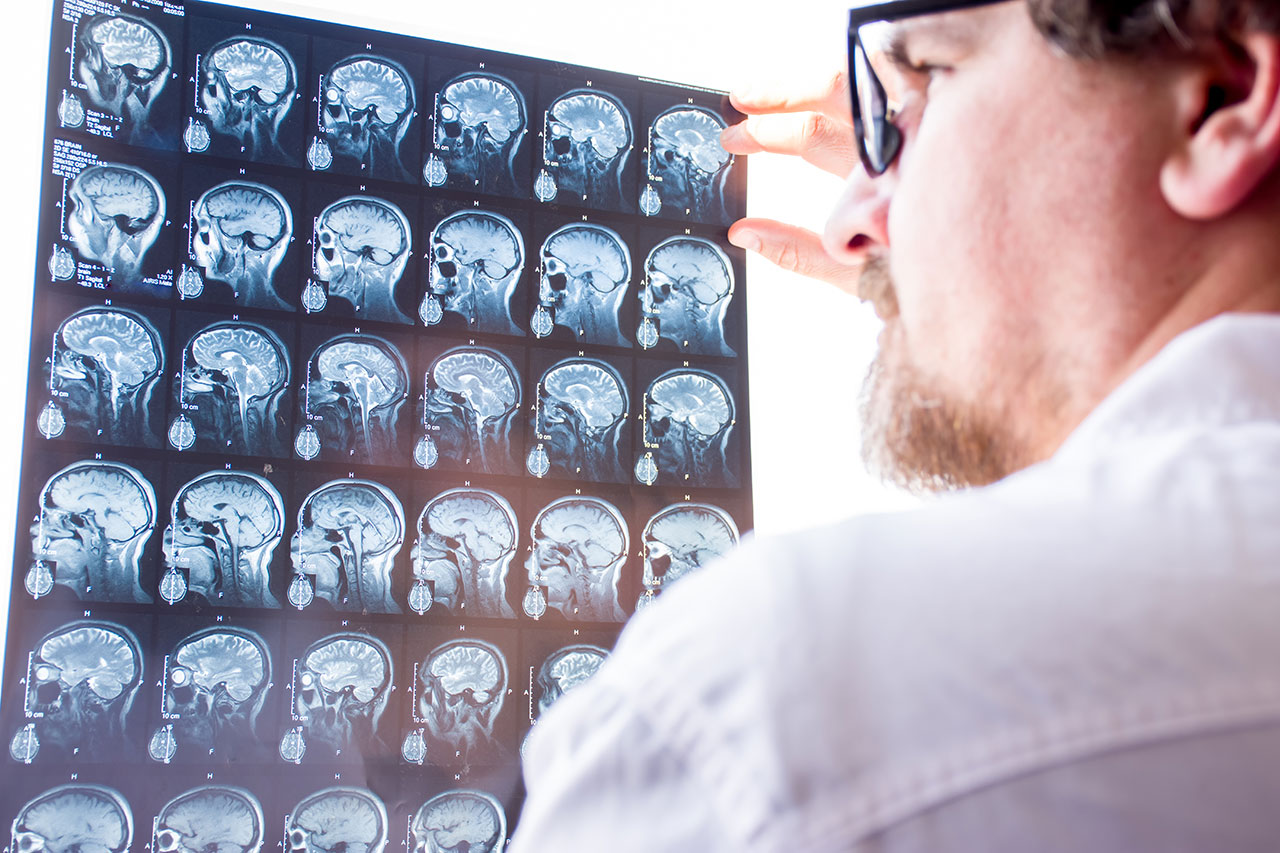
Magnetic resonance imaging (MRI) is a key tool for detecting demyelination, often revealing lesions or plaques in the brain and spinal cord.
Your doctor may be able to detect plaques or lesions in your nervous system that are affecting your daily function. Once this is determined, the treatment can be tailored to the specific source of demyelination in your body.
Special Tests
In order to determine the effects of demyelination on peripheral or optic nerves, several non-invasive diagnostic tests can be performed.
Lumbar Puncture (LP)
Also called a spinal tap, an LP is a procedure that allows your medical team to evaluate your cerebrospinal fluid (CSF). The fluid frequently exhibits signs of infection or inflammatory disease, and the results can be used to aid in the diagnosis of demyelinating disorders, according to the American Academy of Neurology.
An LP is performed by a healthcare provider who cleans a spot on your lower back before inserting a needle and collecting spinal fluid from the area. The test takes 10 to 20 minutes and may be slightly uncomfortable at times.
Evoked Potentials
Evoked potential tests are used to determine how the brain reacts to specific stimuli. For example, visual evoked potentials (VEPs) are frequently used to assess optic neuritis in patients. When a patient is exposed to lights or other visual stimuli, these tests measure the brain’s response.
Electromyography (EMG)
It is necessary to conduct an EMG study as part of the evaluation process for neuropathy. This procedure determines the muscle response to nerve stimulation. The test may cause mild discomfort but is generally safe.
Nerve Conduction Studies (NCV)
Like EMGs, NCV studies are used to determine the presence or absence of peripheral neuropathy in the body. This test is used to determine the speed at which nerves conduct electrical signals in the body. It indirectly stimulates the nerve with shock-emitting electrodes placed directly on the skin over the nerve’s surface. The test may cause mild discomfort but is generally safe.
Demyelinating conditions can affect different parts of the nervous system and are classified by location and underlying cause.
Ask an IVIG Specialist about Side Effects
Demyelinating Disease Categories
Demyelinating diseases are classified based on the part of the nervous system affected (central versus peripheral) and their underlying cause.
Demyelinating Diseases of the Spinal Cord and Brain
Multiple Sclerosis
Demyelination of the brain, spine, and optic nerve is a distinguishing feature of this condition. There are several types of multiple sclerosis, and some are characterized by relapses and remissions, whereas a progressive decline in function characterizes others.
MS is diagnosed through a combination of physical examination, imaging studies, LP, and on occasion, evoked potential tests. MS typically develops between ages 20 and 40 and is a chronic condition that can be managed but not cured.
Progressive Multifocal Leukoencephalopathy (PML)
A rare condition, PML, is a debilitating demyelinating disease that occurs when a virus such as the JC virus is reactivated in the nervous system. Almost everyone has been exposed to this virus, which can induce a mild cold in some people.
Reactivation occurs more commonly in people with severe immune deficiencies and widespread brain involvement, which frequently results in long-term neurocognitive deficits. The patient’s medical history, imaging tests, and the presence of the JC virus in the spinal fluid are all used to make a diagnosis of PML. On rare occasions, a brain biopsy will be required.
CALD
Children with childhood cerebral adrenoleukodystrophy (CALD) are born with a severe genetic condition. It affects primarily young boys because it is an X-linked recessive disorder. Vision is impaired, as is muscle control to a significant degree. As a result of a metabolic disorder that causes the myelin to be destroyed during childhood, demyelination develops. This disease is incurable and results in early death.
A milder variant of the disease, adrenomyeloneuropathy, is caused by the same gene (AMN). AMN is more common in young men and causes progressive weakness; it can lead to wheelchair dependence and is not fatal.
Acute Disseminated Encephalomyelitis (ADEM)
Young children are particularly susceptible to ADEM, which is a rapidly progressive demyelinating episode that occurs frequently. Typically, the symptoms are more severe than those of multiple sclerosis, and the condition resolves without any long-term consequences or recurrence.
Clinically Isolated Syndrome (CIS)
CIS is a single episode that manifests all the multiple sclerosis symptoms. CIS may be the first episode of a relapsing form of multiple sclerosis, but it does not always recur. It is diagnosed in a manner similar to multiple sclerosis.
Get Your IVIG Dose
At-Home InfusionDemyelinating Diseases of Peripheral Nerves
Guillain-Barre Syndrome (GBS)
Guillain-Barre Syndrome (GBS) is a rapidly progressing illness that begins with weakness in both feet and spreads quickly to the legs and arms. GBS is a serious condition because it can weaken the respiratory muscles responsible for controlling breathing. It is possible that mechanical ventilation will be needed to support the respiratory system.
Adults over the age of 50 are most affected by the condition, which is diagnosed clinically and, in some cases, via EMG/NCV. It is usually necessary to treat GBS with intravenous immunoglobulin (IVIG), an immunosuppressive therapy, or plasma exchange, which is a blood-filtering procedure. The prognosis is usually favorable if the disease is treated promptly.
Chronic Inflammatory Demyelinating Polyneuropathy
CIDP is a recurrent form of GBS that is characterized by episodes of weakening. Treatment for episodes is usually accomplished through the administration of IVIG or through plasma exchange.
Hereditary Demyelinating Neuropathies
This is a group of inherited neuropathies characterized by segmental demyelination of peripheral nerve fibers in the peripheral nerves. Charcot-Marie is an example of an inherited neuropathy. Most patients experience gradually progressive weakness and numbness that begins in the lower legs and progresses to the hands.
Demyelinating Disease Symptoms
While damage from demyelination can be long-lasting, treatment focuses on slowing disease progression, managing symptoms, and supporting any recovery.
The symptoms of demyelination differ depending on which part of the nervous system is affected. When peripheral neuropathy strikes, for example, the hands and feet are affected in a pattern that is commonly referred to as a “stocking glove.”
Lower back or spinal nerve demyelination causes sensory changes or leg weakness and may impair bowel and bladder control.
Brain demyelination can cause a variety of issues, including impaired memory and decreased vision.

The following are some of the most common symptoms of demyelinating diseases:
- Fatigue
- Mood or behavioral changes
- Impaired memory
- Problems with concentration
- Decreased bowel or bladder control
- Slurred speech
- Problems chewing or swallowing
- Trouble walking
- Decreased coordination
- Weakness of the arms or legs
- Numbness or tingling of the face, hands, feet, arms, or legs
- Loss of vision or diminished vision
Symptoms of demyelination can be intermittent or progressive, depending on the underlying cause of the condition.
Multiple sclerosis is characterized by episodic symptoms that improve significantly between episodes in a variety of forms. Peripheral neuropathy is a condition that typically worsens with time. In some demyelinating conditions, such as cerebral adrenoleukodystrophy, the effects do not improve over time and can even be fatal in some cases.
Can IVIG help?
Free IVIG Treatment InfoEarly Symptoms of Demyelination
Those suffering from demyelinating conditions do not all experience the same level of symptoms. However, certain symptoms are commonly seen across many demyelinating conditions.
The following are some of the first signs of demyelination that you may notice:
- Overall fatigue
- Unusual nerve pain
- Bladder or bowel problems
- Loss of vision
Types of Demyelination
Demyelination can occur through different mechanisms, most commonly viral or inflammatory processes.
Viral Demyelination
Demyelination caused by viruses characterizes progressive multifocal leukoencephalopathy (PML). The JC virus causes PML.
Inflammatory Demyelination
Inflammatory demyelination is the term used to describe the process by which the immune system attacks myelin. Several types of demyelination are caused by inflammation in the brain and spinal cord, including multiple sclerosis, optic neuritis, and acute disseminated encephalomyelitis.
Among other things, GBS causes inflammatory demyelination of peripheral nerves in other parts of the body.
Get IVIG Prior Authorization
Multiple Sclerosis and Demyelination
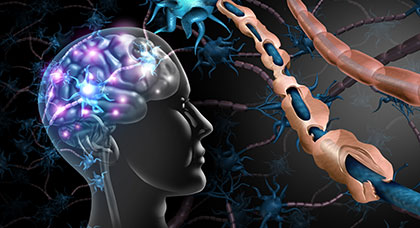
According to the National MS Society, 2.3 million people are affected by multiple sclerosis worldwide.
Multiple sclerosis is characterized by demyelination of the white matter of the brain and the spinal cord. The immune system attacks the myelin, resulting in the formation of lesions or “plaques.” Over time, many plaques, also known as scar tissue, form throughout the brain.
MS is subdivided into the following subtypes:
- Primary progressive multiple sclerosis
- Secondary progressive multiple sclerosis
- Relapsing-remitting multiple sclerosis
- Clinically isolated syndrome
Demyelinating Disease Treatment
Although damage from demyelination can be long-lasting, the body may partially repair myelin in some cases. However, regenerated myelin is often thinner and less effective. Researchers are looking into ways to improve the body’s ability to regenerate myelin.
Most treatments for demyelinating diseases work by suppressing the immune response to the disease. Several medications, including interferon beta-1a and glatiramer acetate, are used to treat the condition.
Low vitamin D levels increase the risk of developing multiple sclerosis and other demyelinating diseases. Deficiency in vitamin D has been shown to suppress inflammatory immune responses.
Demyelination is treated in a variety of ways depending on the underlying cause. The treatment goal is to alleviate symptoms while also preventing further demyelination from occurring. Thus far, there is no treatment available that can effectively restore or rebuild myelin. In some cases, the body can partially repair myelin, though regeneration is often incomplete. Symptoms may disappear if there is only minor or no nerve damage, and neurological recovery may be possible.
There are a variety of treatments available to aid in the prevention of demyelination.
Symptomatic Treatment
Specific symptoms of a demyelinating condition may require treatment. For example, you may require medication to assist you in controlling your pain or discomfort during a procedure. An additional benefit of medication is that it can help with the management of symptoms such as anxiety or depression. Some people’s bladder dysfunction can also be alleviated by taking medication.
Vaccines and Demyelination
In rare cases, immune activation has been studied for a possible association with demyelinating conditions, but a direct causal relationship has not been clearly established. This occurs more frequently in a small number of people who have hypersensitive immune systems.
There have been rare reports of acute demyelinating syndromes following vaccination with certain vaccines, such as influenza or the Johnson & Johnson COVID-19 vaccine.
Rare cases of demyelinating conditions have been reported following vaccination; however, no clear causal relationship has been established.
Immunosuppression
Preventing the inflammatory process is critical in the treatment of a variety of demyelinating disorders, including multiple sclerosis, acute disseminated encephalomyelitis (ADEM), and GBS. A variety of these conditions can be successfully managed with a brief course of intravenous (IV) steroids or plasma exchange therapy.
Disease-modifying therapy (DMT) is used to treat multiple sclerosis because it is a chronic condition. Steroids and DMTs work by suppressing the immune system, which in turn prevents the myelin’s inflammatory attack from taking place.
Get IVIG Copay Assistance
Speak to a SpecialistSupplements
Because certain nutritional deficiencies, such as deficiencies in vitamin B12 and copper, have been linked to demyelination, restoring normal nutrient levels can be a critical component of a successful treatment strategy.
Statins
While some studies have found no evidence that statins have any effect on the central nervous system or remyelination, others have found evidence that statins have an effect.
Currently, most of the evidence indicates that statin therapy is not harmful to the remyelination of the central nervous system. Despite this, the effects of statins on cognitive function are still largely unknown at this time.
Avoiding Toxins
While abstaining from toxins is unlikely to bring your symptoms back to normal, it may help to prevent further neurological damage from occurring.
Rehabilitation
The need for rehabilitation frequently complicates recovery. A variety of rehabilitation techniques such as physical therapy, speech or swallow therapy, and balance therapy can all be used to aid in the recovery from or adjustment to your demyelinating illness.
Key Takeaways
- Demyelination disrupts nerve signaling by damaging the myelin sheath
- It can affect the brain, spinal cord, or peripheral nerves
- Common causes include autoimmune disease, infections, and nutritional deficiencies
- Early diagnosis and treatment can significantly improve outcomes
- While many conditions are chronic, symptoms can often be managed effectively
Conclusion
Demyelinating diseases encompass a wide range of conditions that affect the nervous system in different ways. While some forms are acute and reversible, others are chronic and require long-term management. Advances in research continue to improve understanding and treatment options, offering hope for better outcomes. Early diagnosis, appropriate treatment, and supportive care remain essential for maintaining quality of life.