



Signs and Symptoms of Myasthenia Gravis
The onset of myasthenia gravis (MG) may be sudden and is often difficult to diagnose, as the symptoms are not immediately recognized as MG.
Get IVIG Copay Assistance
Speak to a SpecialistMG affects voluntary muscles, particularly those controlling eye and eyelid movement, facial expression, and swallowing. In most cases, initial symptoms include weakness of the eye muscles, double vision, difficulty swallowing, and slurred speech. However, the degree of muscle weakness involved in myasthenia gravis varies greatly among patients.
Depending on the type and severity, symptoms may include drooping of one or both eyelids (ptosis), blurred or double vision (diplopia), and weakness in the arms, hands, fingers, legs, and neck. Patients may also experience an unstable or waddling gait, changes in facial expression, difficulty swallowing, shortness of breath, and impaired speech (dysarthria).
Can IVIG help?
Free IVIG Treatment InfoCauses and Pathophysiology of Myasthenia Gravis
Myasthenia gravis (MG) is an autoimmune disorder that affects communication between nerves and muscles. In this condition, the body produces antibodies that attack components of the neuromuscular junction, most commonly the acetylcholine (ACh) receptors.
This disruption prevents nerve signals from effectively triggering muscle contraction, resulting in muscle weakness and fatigue. In rare cases, antibodies may target other proteins, such as muscle-specific kinase (MuSK), further impairing neuromuscular transmission.
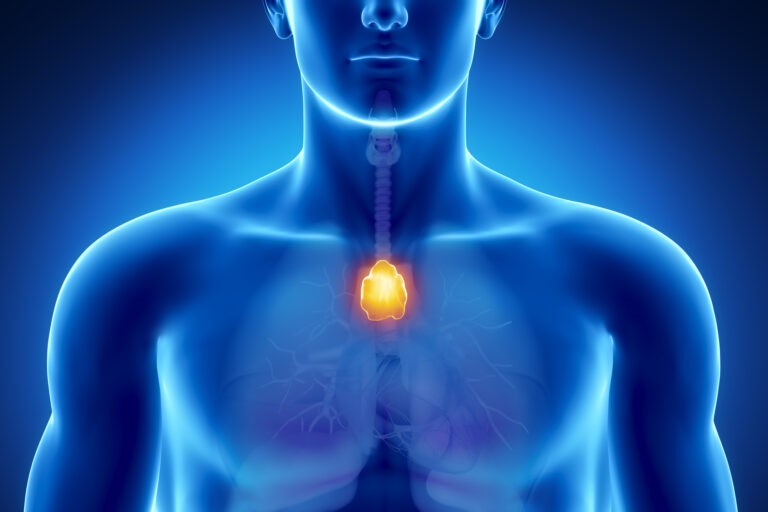
The thymus gland is believed to play a role in the development of MG, as many patients have thymic abnormalities such as thymoma (tumor) or thymic hyperplasia (increased size/weight).
Diagnosis of Myasthenia Gravis
The diagnosis of MG is based on a combination of clinical evaluation, laboratory testing, and imaging studies. Physicians typically look for characteristic patterns of muscle weakness that worsen with activity and improve with rest.
Blood tests may be used to detect antibodies associated with MG, including acetylcholine receptor (AChR) antibodies and muscle-specific kinase (MuSK) antibodies. Electromyography (EMG) can help assess how well nerves communicate with muscles.
Imaging studies such as computed tomography (CT) or magnetic resonance imaging (MRI) may be performed to evaluate the thymus gland for abnormalities. In some cases, bedside tests such as the ice pack test may also support the diagnosis.
Treatment and Management of Myasthenia Gravis
The management of MG focuses on improving muscle strength and reducing immune system activity. Treatment plans vary depending on the severity of symptoms and individual patient factors.
Medications such as acetylcholinesterase inhibitors (e.g., pyridostigmine) are commonly used to improve communication between nerves and muscles. Immunosuppressive therapies, including corticosteroids and other agents, may be prescribed to reduce the abnormal immune response.
In some patients, surgical removal of the thymus gland (thymectomy) may improve symptoms or lead to remission.
During severe exacerbations, particularly myasthenic crisis, emergency treatment may include respiratory support, intravenous immunoglobulin (IVIG), or plasmapheresis to rapidly reduce circulating antibodies.
Complications of Myasthenia Gravis
Myasthenic Crisis
Myasthenic crisis is a potentially life-threatening complication of MG. About one in five people with MG may develop myasthenic crisis at least once in their lifetime. It occurs when the respiratory muscles become too weak to support breathing. Without prompt treatment, this can lead to respiratory failure and death.
Other Associated Conditions
MG is often associated with abnormalities of the thymus, including thymoma or thymic hyperplasia, and may coexist with other autoimmune disorders.
Conclusion
Myasthenia gravis is a chronic autoimmune disorder that affects neuromuscular communication, leading to fluctuating muscle weakness. While symptoms can vary in severity, early recognition and appropriate treatment can significantly improve quality of life and reduce the risk of serious complications such as myasthenic crisis. With advances in diagnosis and management, many individuals with MG are able to effectively control their symptoms and maintain daily functioning.
REFERENCES:
- https://www.mda.org/disease/myasthenia-gravis
- Basta, Ivana et al. “Survival and mortality of adult-onset myasthenia gravis in the population of Belgrade, Serbia.” Muscle & nerve vol. 58,5 (2018): 708-712. doi:10.1002/mus.26132.
- Christensen PB, Jensen TS, Tsiropoulos I, et al Mortality and survival in myasthenia gravis: a Danish population based study, Journal of Neurology, Neurosurgery & Psychiatry 1998;64:78-83.
- Alshekhlee, A et al. “Incidence and mortality rates of myasthenia gravis and myasthenic crisis in US hospitals.” Neurology vol. 72,18 (2009): 1548-54. doi:10.1212/WNL.0b013e3181a41211.
- Wendell, Linda C, and Joshua M Levine. “Myasthenic crisis.” The Neurohospitalist vol. 1,1 (2011): 16-22. doi:10.1177/1941875210382918.
- Twork, S., Wiesmeth, S., Klewer, J. et al. Quality of life and life circumstances in German myasthenia gravis patients. Health Qual Life Outcomes 8, 129 (2010). https://doi.org/10.1186/1477-7525-8-129.
- Szczudlik, Piotr et al. “Determinants of Quality of Life in Myasthenia Gravis Patients.” Frontiers in neurology vol. 11 553626. 23 Sep. 2020, doi:10.3389/fneur.2020.553626.