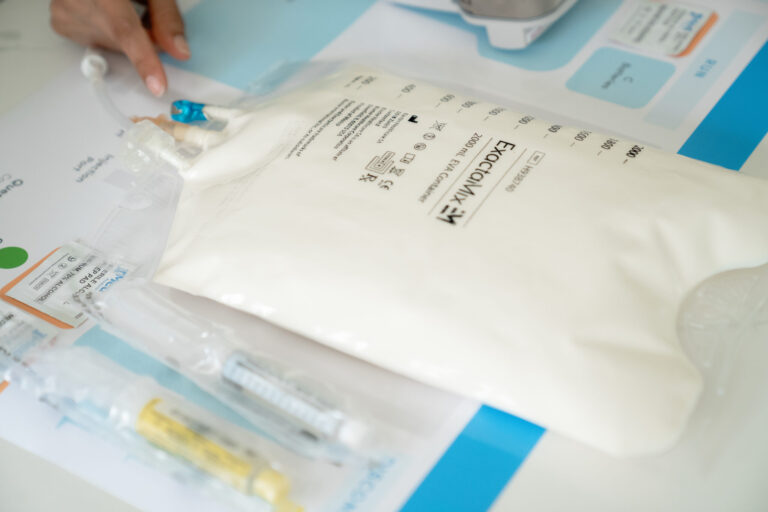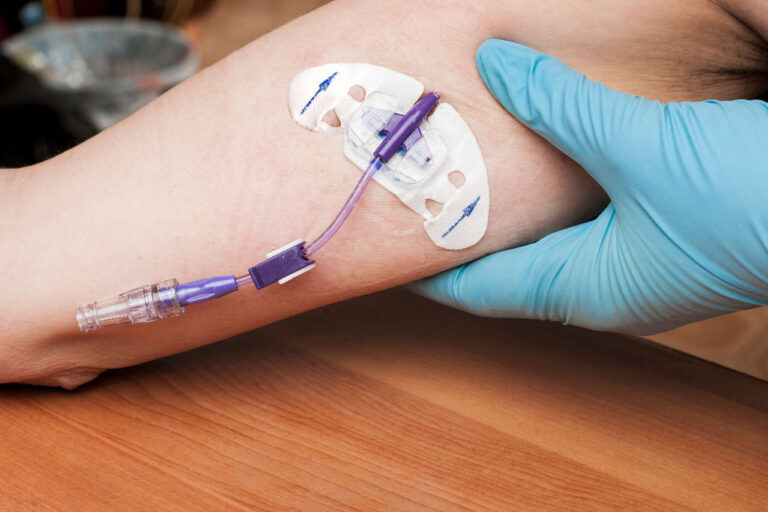




Cyclic TPN is also known as intermittent TPN, non-continuous TPN, or nocturnal cyclic TPN. It is a method that allows patients to receive intravenous nutrient solutions for a shorter period of time (typically for 8 to 18 hours), day or night, rather than over the standard duration of 24 hours. This technique was first reported in the 1970s and aimed to simplify long-term TPN for patients.
Normally, TPN is initiated as a 24-hour infusion, which is beneficial for patients admitted to the hospital. However, for patients who are stable and require long-term TPN infusions at home, it becomes challenging for them to carry out other activities.
Your IV Fluids, Always Available
Full inventory, hassle-free accessHealthcare providers frequently transition patients to cyclic TPN to improve quality of life and social engagement. This technique allows patients to do other activities during the day instead of being continuously connected to the TPN infusion apparatus all day.
In this article, we have explained how cyclic TPN differs from continuous TPN and the potential benefits and concerns associated with it.
Continuous TPN vs. Cyclic TPN
Continuous TPN is typically administered as a 24-hour infusion to a patient new to TPN therapy. Over time, as patients tolerate the infusion and their clinical status improves, healthcare providers may gradually shorten the infusion duration. This shortened infusion time is referred to as Cyclic TPN. Administered as a single 8–18-hour infusion, cyclic TPN is commonly utilized in clinically stable patients who require long-term home parenteral nutrition.
The following are the key features that differentiate cyclic TPN from continuous TPN:
- Unlike continuous TPN, which is given over 24 hours, cyclic TPN requires daily infusion starts and stops, giving the body time to adapt to changes in blood nutrients.
- Cyclic TPN requires a higher rate of nutrients to be infused over a shorter period of time, so the infusion delivers a similar nutrient load as what would be given in continuous TPN.
- Cyclic TPN allows a patient to disconnect from the infusion apparatus during the day, while in continuous TPN, the patient remains connected to the TPN apparatus throughout the day and night.
Potential Benefits of Cyclic TPN

There are several benefits for patients who require long-term TPN infusions at home.
It Provides Comfort and Independence
One of the main benefits is the comfort and independence of patients. Cyclic TPN allows patients to receive TPN infusion only part of the day or night, for 8 to 18 hours daily. Most of the time, patients take TPN at night when resting or sleeping. This helps them to actively participate in daytime tasks such as traveling to and from school, shopping, and engaging in social activities instead of being bound to TPN tubing and pump apparatus all day or all night.
Simply put, cyclic TPN helps restore some sense of normalcy to the daily routine.
It Reduces the Adverse Effects of Long-Term TPN
Unlike continuous TPN, cyclic TPN minimizes the adverse effects or complications associated with long-term TPN to a degree. Liver dysfunction or deterioration is one of the most common adverse effects of long-term TPN.
In 20% to 80% of cases, long-term TPN causes changes in liver functions, such as an increase in the activity of the liver enzymes during the first week of TPN. In addition to this, the elevated level of gamma-glutamyl aminotransferase (GGT), aspartate aminotransferase (AST), alkaline phosphatase (ALP), and total bilirubin (TB) causes steatosis (accumulation of fats in the liver).
Steatosis later progresses to fibrosis and liver cirrhosis if not treated successfully.
However, numerous studies reported that cyclic TPN reduces the chances of liver dysfunction by restoring abnormal AST, GGT, and TB levels to normal levels. Cyclic TPN gives the liver a break, decreasing stress and the potential for complications.
It Prevents Deficiency of Essential Fatty Acids
Certain patients are at increased risk of essential fatty acid deficiency because they require fat-free or low-fat parenteral nutrition solutions. Continuous TPN causes continuous secretion of insulin, which limits the mobilization of essential fatty acids stored in the adipose tissues. Conversely, cyclic TPN limits insulin secretion, which causes the release of essential fatty acids from adipose tissues into the bloodstream. Thus, it helps reverse or treat essential fatty acid deficiency.
However, the research on the use of cyclic TPN for treating or preventing essential fatty acid deficiency is currently limited, and more research needs to be conducted to establish this theory.
Ask About TPN Home Infusion
Potential Concerns of Cyclic TPN
One of the main concerns associated with cyclic TPN is a fluctuation in blood glucose levels. For example, abrupt initiation of IV dextrose solution may lead to hyperglycemia (high blood sugar), and discontinuation of IV dextrose solution may lead to hypoglycemia (low blood sugar). This may not be a good option for patients with critical illnesses like diabetes.
Another concern associated with cyclic TPN is that it can cause high carbon dioxide production in critically ill, mechanically ventilated patients. Cyclic TPN increases energy expenditure more than continuous TPN, leading to high oxygen uptake and carbon dioxide elimination.
Lastly, like continuous TPN, cyclic TPN can also cause infections at the catheter insertion site if proper sterile technique and regular catheter care are not followed.
Summary
Cyclic TPN is a good option for stable patients who require long-term TPN infusions. This method gives patients freedom and independence and improves their quality of life and social activity compared to continuous TPN. Before transitioning to cyclic TPN, potential risks and clinical considerations should be carefully assessed.
REFERENCES:
- Nghiem-Rao, T. H., Cassidy, L. D., Polzin, E. M., Calkins, C. M., Arca, M. J., & Goday, P. S. (2013). Risks and Benefits of Prophylactic Cyclic Parenteral Nutrition in Surgical Neonates. Nutrition in Clinical Practice, 28(6), 745-752. https://doi.org/10.1177/0884533613502813
- Cober, M. P., & Stout, S. M. (2011). Cyclic parenteral nutrition infusion: considerations for the clinician. Practical Gastroenterology, 11.
- Lerebours, E., Colin, R., Hecketsweiler, B., & Matray, F. (1987). Plasma amino acids in total parenteral nutrition comparison of continuous and cyclic parenteral nutrition. Clinical Nutrition, 6(3), 143-149. https://doi.org/10.1016/0261-5614(87)90048-3
- Longhurst, C., Naumovski, L., Garcia-Careaga, M., & Kerner, J. (2003). A Practical Guideline for Calculating Parenteral Nutrition Cycles. Nutrition in Clinical Practice, 18(6), 517-520. https://doi.org/10.1177/0115426503018006517
- Collier, S., Crouch, J., Hendricks, K., & Caballero, B. (1994). Use of Cyclic Parenteral Nutrition in Infants Less Than 6 Months of Age. Nutrition in Clinical Practice, 9(2), 65-68. https://doi.org/10.1177/011542659400900265