



Stiff person syndrome (SPS) is a rare, progressive autoimmune and neurological disorder that affects the central nervous system. It causes severe, painful muscle rigidity and spasms that primarily affect the torso, abdomen, and limbs. Spasms can be triggered by sudden movements, loud noises, cold temperatures, or emotional stress, and the condition can eventually impair mobility and significantly increase fall risk.
Stiff person syndrome starts with the muscles in your trunk and abdomen. Muscle spasms and stiffness may come and go in the early stages. However, after a while, the stiffness becomes continuous.
Over time, stiffness spreads to the legs, arms, and sometimes the face. Because SPS is exceedingly rare and mimics other conditions, it is frequently misdiagnosed as anxiety, fibromyalgia, multiple sclerosis, or Parkinson’s disease — often for years before a correct diagnosis is reached.
Researchers don’t fully understand the exact cause of SPS. Most evidence suggests it involves an autoimmune process in which the immune system mistakenly targets enzymes involved in nervous-system signaling, disrupting normal muscle control and contributing to stiffness and spasms.
Get IVIG Copay Assistance
IVIG Financial AssistanceWhat Is Stiff Person Syndrome?
Stiff person syndrome is a fairly rare autoimmune neurological disorder. It is also known as Moersch-Woltman syndrome. It was previously known as stiff man syndrome.
SPS affects the brain and spinal cord. The muscles of the trunk tighten first in people with SPS. Over time, patients develop stiffness and rigidity in their legs and other muscles. SPS can sometimes induce painful muscle spasms.
SPS is a rare disease that affects only one or two in a million people. As a result, your chances of getting this condition are very low. However, if left untreated, SPS can seriously impair your quality of life.
What Causes Stiff Person Syndrome?
SPS is primarily an autoimmune condition. In the classic form of the disease, the immune system mistakenly attacks glutamic acid decarboxylase (GAD) — an enzyme essential for producing the neurotransmitter GABA. GABA helps the brain and spinal cord regulate motor neurons and muscle relaxation. When GAD is impaired by these antibodies, GABA levels drop, causing muscles to become continuously overstimulated, leading to chronic stiffness and painful spasms.
Therefore, when GAD is blocked from making GABA by the antibodies, nerve cells can become hyperexcitable, contributing to increased muscle stiffness and spasms.
Medical research shows that some people with SPS have antibodies to amphiphysin, a protein involved in transmitting signals from one neuron to another.
According to clinical trials, individuals with these antibodies may develop some cancers. They include:
- Breast cancer
- Lung cancer
- Colon cancer
How exactly GAD plays a role in the development of stiff person syndrome is still unknown.
Some people with SPS do not have anti-GAD antibodies.
Risk Factors Associated With SPS
It is unknown what causes stiff person syndrome. This autoimmune disorder, however, is extremely rare. This syndrome affects around one or two out of every million people.
SPS is diagnosed more often in women than men, and it is commonly identified in adulthood (often between ages 30–60), though it can occur outside this range.
Conditions With Increased Risk of Developing SPS:
- Thyroiditis
- Vitiligo
- Rheumatoid arthritis
- Pernicious anemia
- Type 1 and 2 diabetes
Consult an IVIG Specialist
The Best IVIG Home InfusionSymptoms of Stiff Person Syndrome
Symptoms of stiff person syndrome might appear over a few months to a few years. Some patients remain stable for years, while others slowly worsen.
Early Symptoms
The trunk, legs, and abdominal muscles are the first to become stiff and rigid in most patients.
Other related symptoms include:
- Extremely painful muscle spasms
- Stiff muscles in the trunk
- Sensitivity to sudden stimuli (i.e., loud noises, quick movements, being startled)
- Posture problems (you may hunch over)
- Exaggerated curvature of the lower back (hyperlordosis), which can result in a wide-based gait
- Difficulties in walking
- Limb stiffness
- Aggressive sweating
Muscle Spasms
Muscle spasms in SPS are sudden, forceful, and intensely painful. They can last from a few seconds to several hours, and in severe cases, the contractions are strong enough to dislocate joints or fracture bones. Common triggers include unexpected loud noises, emotional stress, physical touch, cold temperatures, and sudden movements. Spasms can cause patients to fall without warning, making fall prevention a critical part of daily management.
Later Symptoms
You may notice greater stiffness and rigidity in the later stages. Muscle stiffness can spread to other parts of your body, including the face.
In severe cases, symptoms can affect muscles involved in breathing or swallowing. If breathing difficulty occurs, it requires urgent medical evaluation.
Psychological symptoms are a significant and often underrecognized aspect of SPS. The fear of sudden spasms, falls, or triggering events frequently leads to severe anxiety, depression, and agoraphobia — a fear of leaving the home. These psychological effects can be as disabling as the physical symptoms and should be addressed as part of a comprehensive treatment plan.
Conditions Sometimes Associated With SPS:
Some people with SPS also have other autoimmune conditions, and a smaller subset may have an associated cancer (paraneoplastic SPS).
- Several cancers, including colon, lung, and breast cancer
- Thyroid problems
- Diabetes mellitus
- Vitiligo
- Pernicious anemia
Diagnosis of Stiff Person Syndrome
Your doctor will perform a physical exam and a review of your medical history. Because SPS is exceedingly rare and shares symptoms with conditions like multiple sclerosis, Parkinson’s disease, anxiety, and fibromyalgia, it is frequently misdiagnosed — sometimes for years. Diagnosis is typically made by a neurologist and confirmed through a combination of the following tests.
SPS Tests
Blood Test
A blood test determines the presence of glutamic acid decarboxylase (GAD) antibodies. A blood test can detect antibodies against GAD in 60% to 80% of people with SPS. However, the absence of GAD antibodies does not rule out SPS. High levels of GAD antibodies can help to confirm the diagnosis.
Lumbar Puncture
A Lumbar puncture searches for signs that suggest the presence of GAD antibodies. Lumbar puncture also helps in the diagnosis of various diseases.
Electromyography (EMG)
Your doctor may arrange an electromyography (EMG) test, which can detect muscular electrical activity. EMG findings can help support the diagnosis, but clinicians also consider symptoms, exam findings, antibody testing, and response to treatment.
According to the research conducted at Johns Hopkins, SPS presents itself in a wide range of signs and symptoms. As a result, it mimics other diseases, often delaying diagnosis.
Can IVIG help?
Free IVIG Treatment InfoTreatment of Stiff Person Syndrome
SPS has no known cure. Your symptoms will guide your treatment for stiff person syndrome. The goal of treatment is to ease the symptoms while also improving mobility and comfort.
1. Symptomatic Medications
GABA-boosting medications (benzodiazepines)
Benzodiazepines are used to relieve anxiety and muscle tension. High doses are used by doctors to treat muscle spasms.
Benzodiazepines such as diazepam and clonazepam are the first-line treatment for SPS. They work by boosting GABA activity in the brain, which helps reduce muscle rigidity and the frequency of spasms. High doses may be required, and treatment is adjusted based on symptom severity and patient response.
Baclofen
A muscle relaxer called baclofen is also used. Doctors use it for people with stiff person syndrome in whom benzodiazepines are not effective. In addition, some SPS-affected people benefit from using baclofen in addition to benzodiazepines.
Baclofen (oral or intrathecal via implanted pump) is a muscle relaxant used when benzodiazepines alone are insufficient. Intrathecal baclofen, delivered directly into the spinal fluid through a pump, can provide more targeted relief for patients with severe or medication-resistant spasms.
Anticonvulsants
Gabapentin and pregabalin are frequently added to help manage nerve pain and spasms that do not fully respond to GABA-boosting medications.
Targeted injections
Botulinum toxin (Botox) injections can be used for localized, severe muscle spasms — particularly in focal areas of the trunk or limbs where systemic medications are insufficient.
Pain medications and antidepressants
Severe depression and emotional distress are common in people with SPS — both as a direct consequence of living with a painful, progressive condition and as a neurological effect of the disease itself. Antidepressants may help manage these symptoms and are often incorporated into a comprehensive SPS treatment plan. Pain medications may also be prescribed to provide additional relief from chronic musculoskeletal discomfort not fully controlled by muscle relaxants alone.
2. Immunotherapy (Disease Modification)
IVIG (Intravenous Immunoglobulin)
Immune-modulating therapies can be helpful for many patients. IVIG is one treatment option that has shown benefit in clinical studies for some people with SPS.
IVIG treatment is also well-tolerated in terms of relieving the symptoms related to SPS. It is often used as a therapy for immune-mediated diseases, including SPS. IVIG works by reducing the number of antibodies attacking healthy tissues.
IVIG is one of the most common immunotherapies used to quiet the overactive immune response in SPS. Infusions of healthy donor antibodies help neutralize the harmful anti-GAD antibodies responsible for muscle hyperexcitability. IVIG has demonstrated benefit in clinical trials and is well-tolerated by most patients.
Plasmapheresis
Plasmapheresis is a process in which your blood plasma is exchanged for fresh plasma. This process lessens the number of antibodies in your body. By filtering harmful antibodies directly from the blood, plasmapheresis can produce faster symptom relief than IVIG in some patients, though its effects are typically shorter-lived and must be repeated.
Immunosuppressants
Medications such as rituximab or mycophenolate mofetil are used in refractory cases to suppress the production of the anti-GAD antibodies responsible for attacking the nervous system. These are typically reserved for patients who do not respond adequately to IVIG or plasmapheresis.
Autologous stem cell transplant
Autologous stem cell transplant is the process in which your blood and bone marrow cells are first collected. They are then multiplied before being returned to your body. This is an experimental treatment that you can consider if all other options fail.
Because it carries significant risks, it’s usually considered only in carefully selected cases at specialized centers.
3. Supportive & Non-Pharmacological Therapy
Physical Therapy
Your doctor may recommend you to a physical therapist in addition to medications. However, physical therapy alone cannot treat SPS.
According to medical research, physical therapy may help with drug side effects. In addition, the exercises may significantly help with:
- Emotional well-being
- Walking
- Independence
- Pain
- Posture
- Overall day-to-day function
- Range of motion
Physical therapy for SPS focuses on stretching, gait training, and heat therapy to improve movement and prevent joint contractures.
Aquatic Therapy
Gentle movement and stretching in warm water (aquatic therapy) can often relieve severe stiffness more effectively than land-based exercises, as the buoyancy reduces strain on rigid muscles and joints. Many SPS specialists recommend aquatic therapy as a component of the rehabilitation plan.
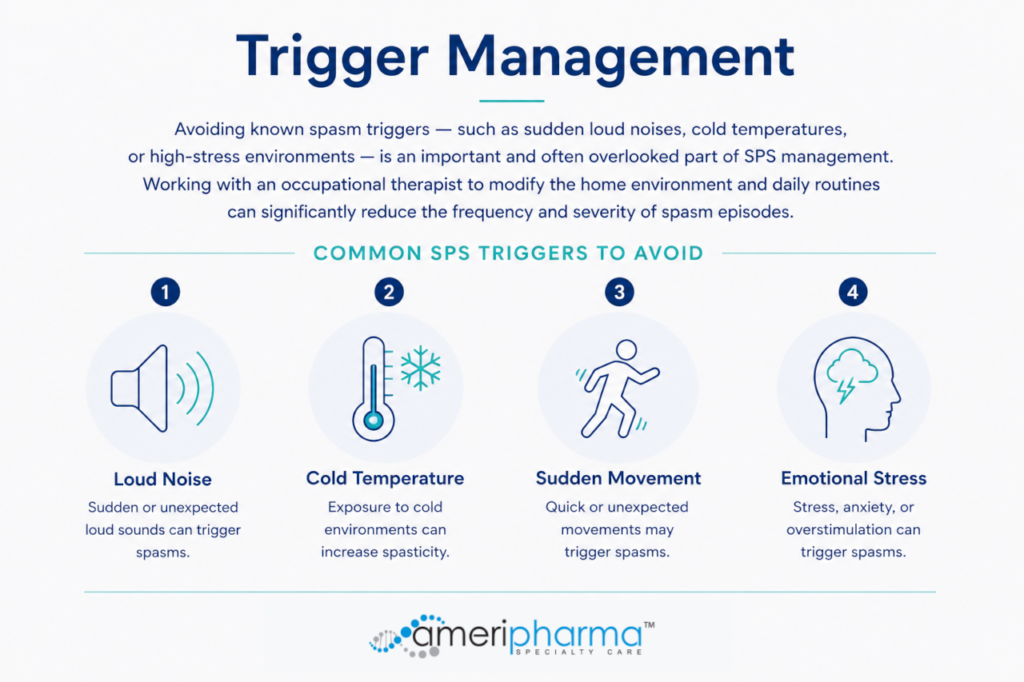
Trigger Management
Avoiding known spasm triggers — such as sudden loud noises, cold temperatures, or high-stress environments — is an important and often overlooked part of SPS management. Working with an occupational therapist to modify the home environment and daily routines can significantly reduce the frequency and severity of spasm episodes.
Get IVIG Copay Assistance
Speak to a SpecialistComplications of Stiff Person Syndrome
Stiff person syndrome (SPS) causes muscle spasms. These problems can hamper your daily life. You may experience problems including:
- Frequently falling from standing
- Severe anxiety and depression
- Excessive sweating
- Broken bones
- Hunching over
- Emotional distress
SPS can also increase your risk of having several other conditions. They include:
- Type-I and Type-II diabetes
- Cancer
- Thyroid problems
The Prognosis for Stiff Person Syndrome
Because of your lack of stability, you’re more likely to fall if you have this condition. This increases your chances of suffering injuries and possibly becoming permanently disabled.
The prognosis for stiff person syndrome varies according to the individual’s symptoms.
Furthermore, the severity of the syndrome and the rate of decline vary from person to person.
Everyone reacts differently to treatment. For example, some SPS-affected people respond well to drugs and physical therapy. But others may not respond as well.
Contact your doctor if you get muscle spasms or stiffness in your trunk, arms, or legs. If you have any of the risk factors, talk to your doctor about stiff person syndrome.
You could also call a local university or tertiary medical center. These institutions have the most up-to-date technologies in the field of rare diseases.
You can find other related information at the National Institute of Neurological Disorders and Stroke. This organization collects and verifies all trials related to SPS.
Home Infusion
We Come To YouFAQs
What is the life expectancy of a patient with stiff person syndrome?
SPS affects people differently, and outcomes vary. Some people respond well to treatment and maintain function for many years, while others may have more severe or progressive symptoms. According to some estimates, the life expectancy for people with SPS ranges from 6 to 28 years from the onset of the condition. A neurologist can give the most accurate outlook based on your subtype, severity, and treatment response.
Can a person with stiff person syndrome have gluten in their diet?
Some people with SPS also have other autoimmune conditions (including celiac disease) or report sensitivity to gluten. If you suspect gluten affects your symptoms, talk with your clinician about proper evaluation (including testing for celiac disease) before making major dietary restrictions.
Is stiff person syndrome progressive?
Stiff person syndrome is a rare progressive disorder. It causes progressive muscle stiffness, rigidity, and spasms. In the early stage, muscle stiffness may come and go. Over time, the stiffness becomes constant.
Is stiff person syndrome terminal?
SPS can be serious and, in severe cases, complications can be life-threatening. However, many people live with SPS for years and can improve or stabilize with treatment. It’s best discussed individually with a specialist.
Why is my body so tight and stiff?
SPS is an autoimmune disorder that causes muscle stiffness, rigidity, and spasms. In this condition, your body develops an antibody that attacks an enzyme known as glutamic acid decarboxylase (GAD). GAD helps in the production of a neurotransmitter called gamma-aminobutyric acid (GABA). GABA helps to control muscle movement.
As a result, your body grows increasingly tight and stiff over time.
Can stiff person syndrome be cured?
There is no cure for this rare disease. In addition, doctors can confuse it with other autoimmune diseases. Multiple sclerosis (MS) and Parkinson’s disease are two examples.
Some treatment options can help you cope with the symptoms and offer relief. Among them, the best option is intravenous immunoglobulin (IVIG) therapy. IVIG works by decreasing the number of antibodies that attack healthy tissues.
Is stiff person syndrome a disability?
Stiff person syndrome can make you disabled. The symptoms develop slowly, and after some time, they may become severe, causing disability.
If you are planning to get benefits from the Social Security Administration (SSA), you will need to meet SSA’s basic requirements for disability. You must be unable to work due to your medical condition. Furthermore, your condition must have lasted or be likely to last at least 12 months in a row.
Get IVIG Copay Assistance
Speak to a SpecialistWhat causes a person to walk stiffly?
In stiff person syndrome, over time, leg muscles become stiff. As leg muscles become stiffer and stiffer, people with stiff person syndrome end up walking more stiffly.
How do you get stiff person syndrome?
Scientists are still unclear as to what causes SPS. However, research suggests that it results from a faulty autoimmune response in the brain and spinal cord.
Stiff person syndrome is not a transmissive disease. This means you can’t get this disorder from other people. However, scientists believe that genetics may play a role in causing SPS in combination with other factors.
Does exercise help stiff person syndrome?
According to medical research, exercise can help those suffering from stiff person syndrome.
One report suggests many helpful exercises, which include:
- Stretching
- Range of motion (ROM) exercises for stiff areas
- Lower back exercises
- Pelvic tilt
- Isometric abdominal exercises
These exercises were found to be beneficial for:
- Low back pain
- Hyperlordosis
- Mobility
- Improving one’s function and ability to perform day-to-day tasks
If you are suffering from SPS, daily exercise is highly recommended.
Can stiff person syndrome kill you?
Severe symptoms and complications (such as falls, severe spasms, or breathing/swallowing difficulties) can be dangerous. If symptoms are rapidly worsening or breathing becomes difficult, seek urgent medical care. Safety planning (fall prevention, assistive devices, home safety assessment, and support at home) can reduce risks.
Can the COVID-19 medicine, tocilizumab (Actemra), cure SPS?
There are reports of improvement in SPS symptoms with tocilizumab in individual cases, but this is not an established standard treatment. More research is needed, and any off-label use should be guided by a specialist.
What is the cause of stiff person syndrome?
Stiff person syndrome is caused by an autoimmune attack on glutamic acid decarboxylase (GAD), an enzyme needed to produce GABA — the neurotransmitter that controls muscle relaxation. When antibodies block GAD, GABA levels drop and muscles become continuously overstimulated, causing chronic stiffness and painful spasms. The exact trigger for this autoimmune response is not fully understood.
Can a person recover from stiff person syndrome?
There is no cure for stiff person syndrome, but many patients achieve meaningful symptom control with treatment. IVIG, muscle relaxants, and physical therapy can significantly reduce spasm frequency and improve mobility. Outcomes vary widely — some patients remain stable for years, while others experience gradual progression. A neurologist specializing in rare neuromuscular diseases can provide the most accurate outlook for your case.