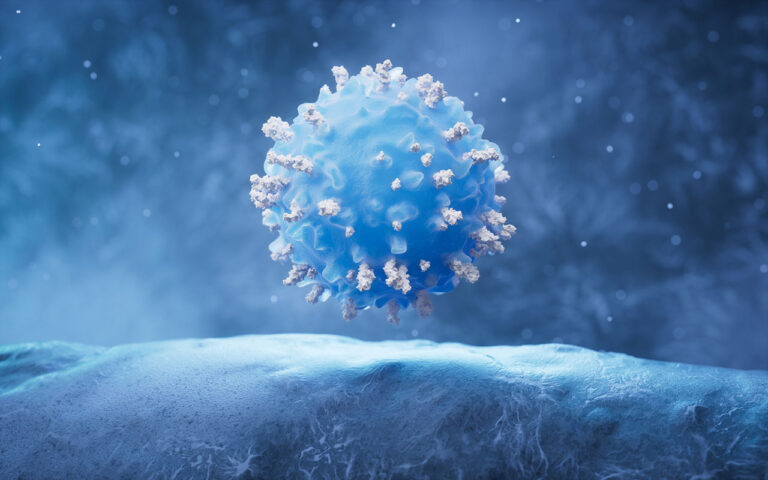


La inmunoglobulina intravenosa (IVIG) actúa a través de múltiples vías, en lugar de un único mecanismo. Estos mecanismos incluyen la supresión de glóbulos blancos especializados, la neutralización de autoanticuerpos y la regulación de las respuestas inmunitarias.
Obtenga asistencia para el copago de IgIV
¿Qué es la IgIV?
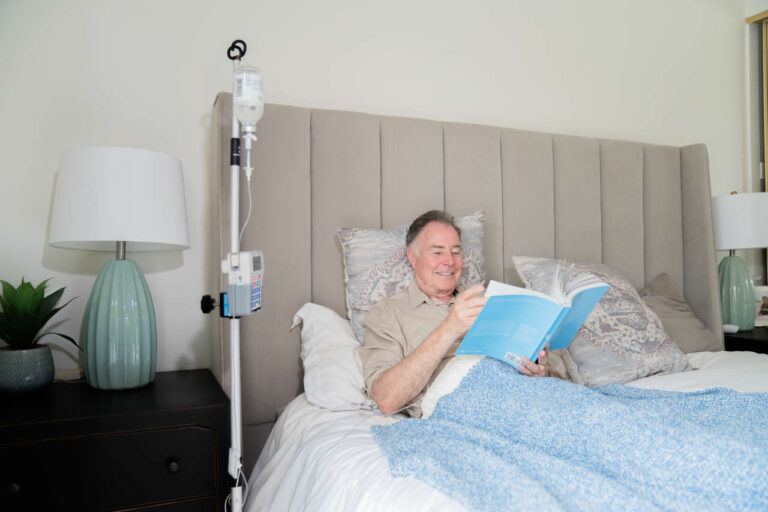
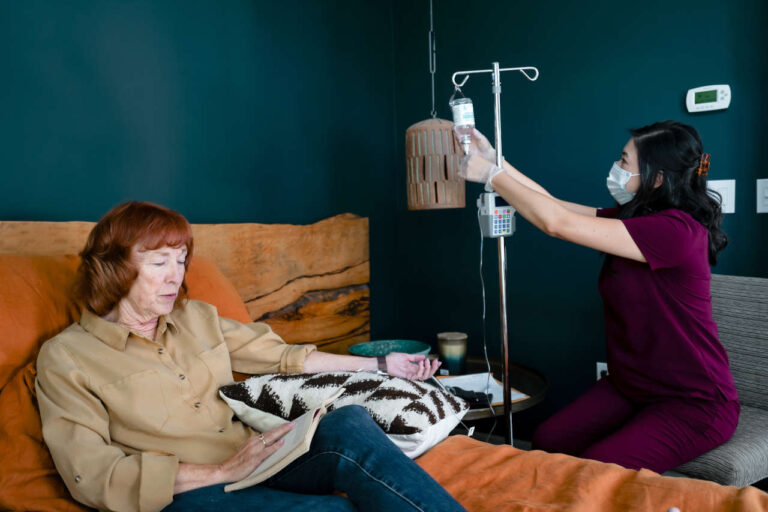
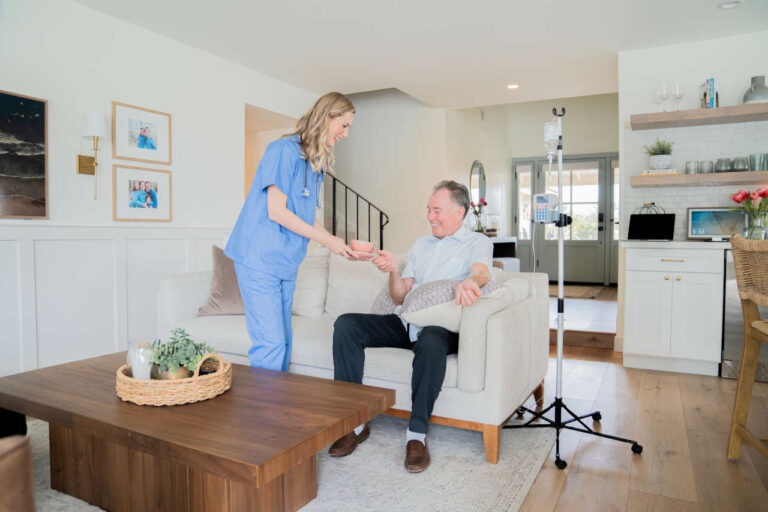
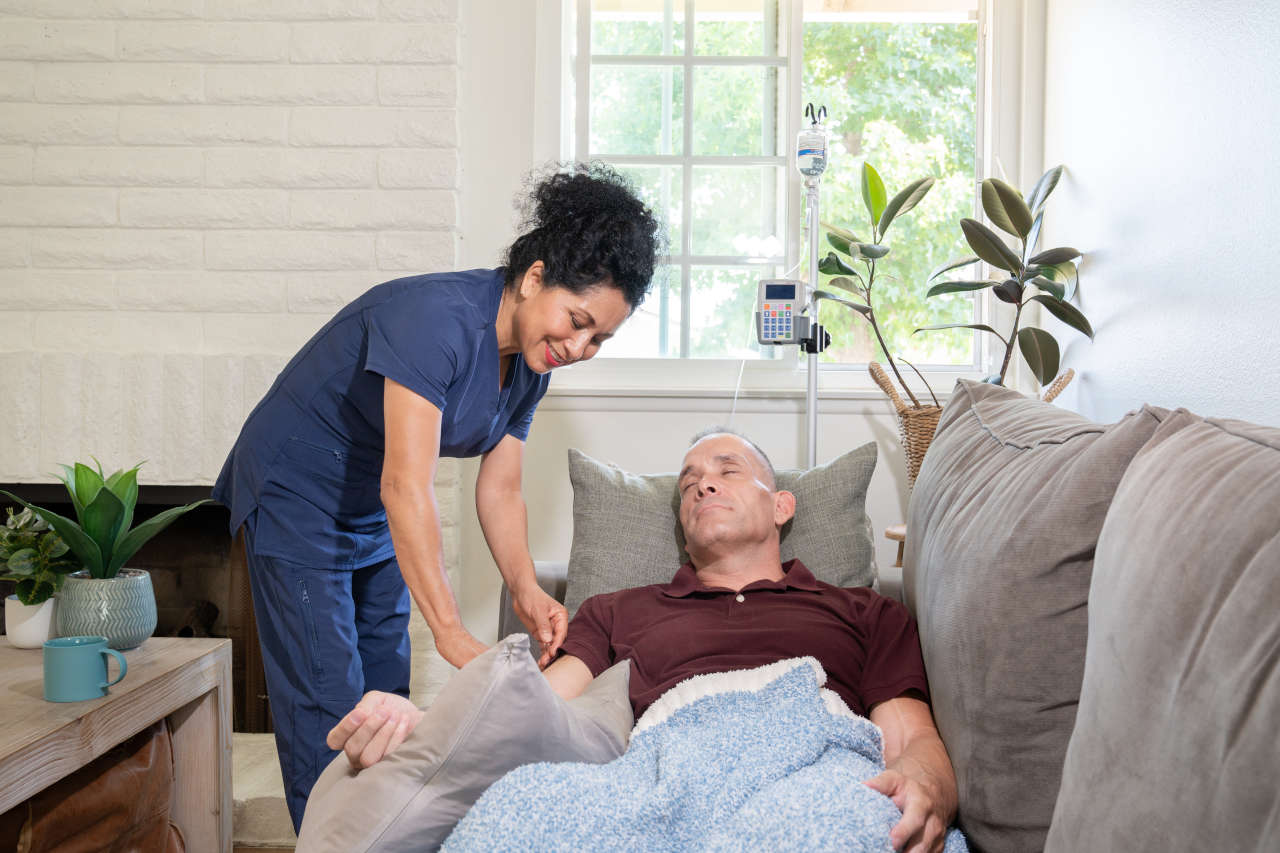
Inmunoglobulina intravenosa (IVIG) Es un producto sanguíneo que se administra mediante infusión intravenosa (IV). Contiene anticuerpos purificados obtenidos del plasma agrupado de donantes sanos.
Cuando una sustancia extraña ingresa al cuerpo, el sistema inmunitario produce proteínas protectoras llamadas anticuerpos o inmunoglobulinas (Ig). Estos anticuerpos se adhieren al agente extraño y lo eliminan del organismo.
Hay cinco tipos de anticuerpos: IgA, IgD, IgE, IgG e IgM. Los productos de IVIG contienen principalmente anticuerpos IgG (más del 901% del total).
Su proveedor de atención médica puede recetarle IVIG para reforzar el sistema inmunológico, tratar enfermedades autoinmunes, y prevenir infecciones en personas con sistemas inmunitarios debilitados.
Mecanismo de acción de la IVIG
La inmunoglobulina intravenosa (IVIG) no es una terapia de objetivo único; sus efectos varían según la dosis, la enfermedad y los factores propios del paciente.
Por ejemplo, la inmunoglobulina intravenosa (IVIG) actúa como terapia de reemplazo en personas con deficiencias de anticuerpos. Además, actúa como inmunomodulador y antiinflamatorio en muchos trastornos autoinmunes e inflamatorios.
Además, la inmunoglobulina intravenosa (IVIG) puede ser tanto proinflamatoria como antiinflamatoria, dependiendo de la dosis.
Mecanismos de acción de la inmunoglobulina intravenosa (IVIG) en las inmunodeficiencias
Como terapia de reemplazo, la inmunoglobulina intravenosa (IVIG) actúa principalmente sustituyendo la IgG deficiente. Esto ayuda a neutralizar los patógenos y a reducir las infecciones recurrentes.
Para este fin, la dosis de reemplazo típica es de 200 mg/kg a 400 mg/kg de peso corporal, administrada cada 3 semanas [1].
En dosis bajas, la IVIG interactúa con los invasores extraños para ayudar a activar la primera línea de defensa inmunitaria. Esta parte del sistema inmunitario (también conocido como sistema del complemento):
- Se dirige a la sustancia extraña, como las bacterias.
- Desencadena la inflamación para prevenir la infección.
- Elimina la sustancia extraña del cuerpo.
Por lo tanto, la IVIG en dosis bajas generalmente promueve la inflamación para proteger el cuerpo de organismos extraños.2].
Obtenga autorización previa para IgIV
Mecanismo de acción de la inmunoglobulina intravenosa (IVIG) en enfermedades autoinmunes e inflamatorias.

La inmunoglobulina intravenosa (IVIG) puede interactuar simultáneamente con diferentes componentes del sistema inmunitario. Por lo tanto, las acciones inmunomoduladoras de la IVIG implican múltiples mecanismos y varían ampliamente según la enfermedad.
Se utilizan dosis altas, generalmente 2 g/kg/mes, en enfermedades autoinmunes e inflamatorias. A diferencia de la IVIG de reemplazo, la IVIG en dosis altas es más inmunosupresora y antiinflamatoria [3].
Se cree que los efectos inmunomoduladores de la IVIG se producen como resultado de las siguientes interacciones [4,5,6,7,8]:
Interacción con células sanguíneas específicas
Los monocitos y macrófagos son glóbulos blancos que identifican y eliminan los patógenos del organismo. Lo hacen liberando sustancias inflamatorias y fagocitando los patógenos. En una persona sana, la vida útil de estas células está estrictamente regulada para prevenir una inflamación excesiva.
Sin embargo, en las enfermedades inflamatorias crónicas, estas células sobreviven más tiempo de lo habitual. En consecuencia, su acumulación incrementa aún más la inflamación. La inmunoglobulina intravenosa (IVIG) se une a estas células y ayuda a reducir la inflamación.
La inmunoglobulina intravenosa (IVIG) puede ayudar a reducir la inflamación al suprimir la multiplicación de las células T. Las células T son glóbulos blancos que combaten los microorganismos causantes de enfermedades.
Según un estudio de 2024, las células T que migran desde la periferia al sitio de la lesión tisular están involucradas en el desarrollo de muchos trastornos inflamatorios crónicos, incluyendo [9]:
La inmunoglobulina intravenosa (IVIG) puede potenciar o bloquear la actividad de las células asesinas naturales (células NK). Las células NK son glóbulos blancos que eliminan las células infectadas por virus y las células cancerosas. La IVIG bloquea la actividad de las células NK en mujeres que sufren abortos espontáneos recurrentes, lo que favorece un mejor pronóstico del embarazo.
Por el contrario, la IVIG mejora la actividad de las células NK en la enfermedad de Kawasaki y en los trastornos convulsivos.
Interacción con autoanticuerpos
Los autoanticuerpos son proteínas producidas por el sistema inmunitario. Atacan los tejidos sanos del cuerpo en lugar de sustancias extrañas. En algunas personas, pueden provocar el desarrollo de trastornos autoinmunes.
La inmunoglobulina intravenosa (IVIG) neutraliza los autoanticuerpos patógenos. De esta forma, impide que el sistema inmunitario ataque los tejidos y órganos sanos del cuerpo. La IVIG reduce la producción de autoanticuerpos al bloquear la proliferación de las células B.
La inmunoglobulina intravenosa (IVIG) se utiliza en muchos trastornos autoinmunes, como por ejemplo:
Habla con un especialista
Acerca de la asistencia para copagosPreguntas frecuentes
¿Cuál es el mecanismo de acción de la inmunoglobulina intravenosa (IVIG)?
Los mecanismos de acción de la inmunoglobulina intravenosa (IVIG) varían ampliamente según la dosis, la enfermedad que se esté tratando y las características del paciente. Como terapia de reemplazo, la IVIG actúa sustituyendo los anticuerpos que faltan en personas con inmunodeficiencias. Como inmunomodulador, la IVIG afecta a diversas células inmunitarias y a los procesos implicados en la regulación inmunitaria.
¿Qué son IgM, IgG, IgA, IgD e IgE?
Existen cinco tipos principales de inmunoglobulinas (anticuerpos). Las subclases de IgG e IgA son IgG1, IgG2, IgG3, IgG4, IgA1 e IgA2, respectivamente.
¿Cómo funciona la inmunoglobulina intravenosa (IVIG) para aumentar las plaquetas?
Aunque el mecanismo exacto no está claro, la IVIG puede:
- Reducir la destrucción de plaquetas
- Mejorar las señales para la producción de plaquetas
¿Cómo funciona la inmunoglobulina intravenosa (IVIG) para el síndrome de Guillain-Barré?
Los investigadores aún no han determinado el mecanismo de acción exacto. Sin embargo, creen que la inmunoglobulina intravenosa (IVIG) puede ser eficaz contra el síndrome de Guillain-Barré (SGB) al disminuir los anticuerpos patógenos que atacan las células nerviosas.
¿Cómo funciona la inmunoglobulina intravenosa (IVIG) en las enfermedades autoinmunes?
La inmunoglobulina intravenosa (IVIG) puede ayudar a prevenir el daño tisular y orgánico en enfermedades autoinmunes neutralizando los anticuerpos dañinos y reduciendo la producción de anticuerpos por parte de las células B.
¿Cómo ayuda la inmunoglobulina intravenosa (IVIG) con la miastenia gravis?
El mecanismo exacto no se comprende del todo. Sin embargo, la IVIG puede ayudar a mejorar síntomas de miastenia gravis (MG) y la fuerza muscular al neutralizar los autoanticuerpos que dificultan la comunicación entre los músculos y los nervios.
REFERENCIAS:
- Jolles, S et al. “Usos clínicos de la inmunoglobulina intravenosa”. Inmunología clínica y experimental, vol. 142, n.º 1 (2005): 1-11. doi:10.1111/j.1365-2249.2005.02834.x
- A. Durandy, S.V. Kaveri, T.W. Kuijpers, M. Basta, S. Miescher, J.V. Ravetch, R. Rieben, Inmunoglobulinas intravenosas: comprensión de sus propiedades y mecanismos, Clinical and Experimental Immunology, Volumen 158, Número Suplemento_1, diciembre de 2009, Páginas 2–13, https://doi.org/10.1111/j.1365-2249.2009.04022.x
- Arumugham VB, Rayi A. Inmunoglobulina intravenosa (IVIG) [Actualizado el 3 de julio de 2023]. En: StatPearls [Internet]. Treasure Island (FL): StatPearls Publishing; enero de 2026-. Disponible en: https://www.ncbi.nlm.nih.gov/books/NBK554446/
- Patil, V. y Kaveri, SV (2013), Mecanismos de acción de la IVIG en enfermedades autoinmunes e inflamatorias. VOXS, 8: 185-188. https://doi.org/10.1111/voxs.12037
- Burns, Jane C. y Alessandra Franco. “Efectos inmunomoduladores de la terapia con inmunoglobulina intravenosa en la enfermedad de Kawasaki”. Expert review of clinical immunology, vol. 11, núm. 7 (2015): 819-25. doi:10.1586/1744666X.2015.1044980
- Shock, Anthony, et al. “Analizando el mecanismo de acción de la inmunoglobulina intravenosa en enfermedades autoinmunes humanas: lecciones de las modalidades terapéuticas dirigidas a los receptores Fcγ”. Journal of Allergy and Clinical Immunology, vol. 146, n.º 3, julio de 2020, pp. 492–500, doi:10.1016/j.jaci.2020.06.036.
- Parihar, Arti et al. “Los monocitos y macrófagos regulan la inmunidad mediante redes dinámicas de supervivencia y muerte celular”. Journal of Innate Immunity, vol. 2, n.º 3 (2010): 204-15. doi:10.1159/000296507
- Velikova, Tsvetelina et al. “Inmunoglobulinas intravenosas como inmunomoduladores en enfermedades autoinmunes y medicina reproductiva”. Antibodies (Basilea, Suiza), vol. 12, n.º 1, pág. 20, 2 de marzo de 2023, doi:10.3390/antib12010020
- Giovenzana, Anna, et al. “Tráfico de células T en enfermedades inflamatorias crónicas humanas”. iScience, vol. 27, n.º 8, julio de 2024, pág. 110528, doi:10.1016/j.isci.2024.110528.