



博客

免疫球蛋白

静脉注射免疫球蛋白治疗高免疫球蛋白E综合征(HIES)

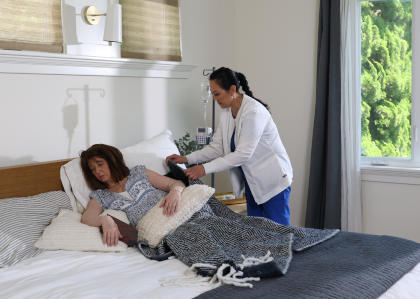
Nurse with patient receiving IVIG in Hyperimmunoglobulinemia E Syndrome (HIES)

Hyperimmunoglobulinemia E syndrome (HIES), commonly known as Job’s Syndrome, is a rare primary immunodeficiency disorder where the immune system does not work properly. People with HIES typically have very high levels of immunoglobulin E (IgE) along with frequent infections and skin and lung problems [1][2]. Without proper treatment, HIES can cause permanent organ damage. 

您是否符合 $0 共付额资格?

请咨询专家了解详情
(877) 778-0318

The good news is that modern medical care has advanced significantly. If you are diagnosed with HIES today, you have far better treatment options than before. In recent years, among the treatment options, 静脉注射免疫球蛋白 (IVIG) has shown promising results. In this article, we will discuss everything you need to know about IVIG for hyperimmunoglobulinemia E syndrome (HIES).

Hyperimmunoglobulinemia E Syndrome (HIES): Overview

Normally, your immune system protects you by fighting off foreign pathogens like viruses and bacteria. However, in hyperimmunoglobulinemia E syndrome (HIES) — a rare genetic immune disorder — the immune system does not work properly. As a result, you suffer from frequent infections, especially in your skin and lungs. 

People with HIES have a very high level of an antibody called immunoglobulin E (IgE), but it does not protect them from infections. There are mainly two types of HIES, and they share some common symptoms. However, their complications, treatment needs, and long-term outcomes are different. Below, they are described in detail [1][2]:

  1. Autosomal Dominant HIES (AD-HIES): This type of HIES is usually caused by mutations in the STAT3 gene. You only need to inherit one defective copy of this gene to get this disease. This disease leads to very high immunoglobulin E (IgE) levels, frequent skin and lung infections, and facial, dental, and skeletal abnormalities. 
  2. Autosomal Recessive HIES (AR-HIES): This type of HIES is most commonly caused by DOCK8 gene mutations. Mutations in other genes, such as TYK2, PGM3, and SPINK5, can also cause this disease. You need to inherit the mutated gene from both your parents to get this disease. Compared to AD-HIES patients, AR-HIES patients suffer from more severe viral infections and stronger allergies. 

Signs and Symptoms of HIES

The symptoms of HIES vary from person to person, depending on the type and severity. Some common symptoms include [2][3]:

  • Extremely high levels of an antibody called immunoglobulin E (IgE) in the blood
  • Eczema and skin infections
  • Recurrent lung infections
  • Delayed loss of baby teeth
  • Severe allergies and asthma
  • Facial asymmetry (commonly in AD-HIES)
  • Frequent fungal infections

Treatment Options for HIES

Unfortunately, currently there is no cure for hyperimmunoglobulinemia E syndrome (HIES). The main goals of the current treatment options are to manage your symptoms and prevent infections. Here are some of the standard treatment options for HIES [2][3]:

  • Antibiotics: You need to frequently take antibiotics to treat and prevent bacterial infections.
  • Antiviral Medicines: If you develop infections from viruses, you need to take antiviral medicines. For example, to treat chicken pox, you need to take Aciclovir.
  • Skin Care: Moisturizers, topical steroids, and antiseptic baths help control eczema and prevent skin infections.
  • 外科手术: You may need to drain skin and lung abscesses surgically.
  • 静脉注射免疫球蛋白(IVIG): IVIG can be a very important supportive care for you. It can help you by boosting your immune function.

与共付额援助专员交谈

安排咨询

How Does IVIG Help Patients With Hyperimmunoglobulinemia E Syndrome (HIES)?

Patient on bed receiving IVIG at home

Intravenous Immunoglobulin (IVIG) is a purified blood product that contains 抗体 from thousands of healthy plasma donors. In HIES, your immune system does not work properly. IVIG can help since it contains ready-made antibodies that help regulate and strengthen your immune system. Here is how IVIG helps patients with HIES:

It Strengthens the Immune System: In HIES, although you have a very high level of IgE, your antibody function is weak. IVIG contains various antibodies, which may help you fight infections more effectively [4].

It Reduces Infection Frequencies: In HIES, the biggest challenge that you face is recurrent skin and lung infections. Several studies showed that IVIG can reduce the frequency of infections [5][7].

It Modulates the Immune System: In HIES, your immune system may sometimes react too strongly, causing eczema, allergies, and severe inflammation. IVIG can calm your immune system by suppressing harmful immune cells and cytokines [6].

It Prevents Lung Damage: HIES can cause repeated lung infections, which can lead to permanent lung damage. IVIG can help prevent long-term lung damage by reducing the frequency of lung infections.

Overall, IVIG is not a cure for HIES. But it plays an important supportive role. If you use it under proper medical supervision, it can improve your quality of life, reduce complications, and prevent long-term organ damage.

Effectiveness of IVIG in Hyperimmunoglobulinemia E Syndrome (HIES): What Studies Say

Because HIES is very rare, large-scale clinical trials are limited. Most of what we know about IVIG for hyperimmunoglobulinemia E syndrome (HIES) comes from small studies and case reports. Although the evidence is limited, these studies suggest that IVIG may help reduce the frequency of infections and improve many immune-related symptoms in HIES patients. 

Over the years, clinical research has produced mixed results. This is partly due to the differences in patient characteristics and disease severity. Some have indicated that IVIG can play a supportive role in managing the condition. For example, a 2007 study presented the case of a 12-year-old boy who suffered from recurrent infections due to HIES. Once IVIG therapy began, he experienced significant clinical improvements and remained free of recurrent infections [5]. Similarly, another study also supports the role of IVIG in treating recurrent infections in HIES [7]. Additionally, some research concluded that IVIG is effective in treating severe eczema and atopic dermatitis in HIES patients by reducing inflammation and stabilizing the immune response [8].

Other reports highlight similar outcomes. A 2001 case report presented the incident of a 37-year-old woman with HIES who suffered from pneumonia. IVIG at a moderate dose improved her pneumonia symptoms [9]. Similarly, another 2001 report presented the case of a 12-month-old infant with severe eczema and pulmonary infection due to HIES. After 35 days of IVIG therapy, the patient showed improvement [10]. 

However, not all findings are positive. In a 1998 study, researchers used high-dose IVIG in one patient with HIES. Their results did not show meaningful clinical improvement in the HIES patient. The researchers observed no significant reduction in IgE levels, IgE synthesis, or other major immune functions [11].

In summary, while we lack large-scale studies, small studies and case reports suggest that IVIG can help some HIES patients — especially those with recurrent infections, severe eczema, or poor response to standard treatments. Results vary from patient to patient, and some studies show little to no benefit. Overall, IVIG is most effective as a supportive therapy rather than a standalone treatment.

获得经济援助

(877) 778-0318

常见问题解答

Here are some frequently asked questions about IVIG for hyperimmunoglobulinemia E syndrome (HIES).

Does IVIG cure hyperimmunoglobulinemia E syndrome (HIES)?

No. Intravenous Immunoglobulin (IVIG) does not cure HIES. It can reduce the frequency of infections and improve the quality of life.

Is IVIG FDA-approved for treating HIES?

No. IVIG is not FDA-approved for treating HIES. However, it is widely used off-label by doctors to control infections and support immune functions in HIES.

How long does it take for IVIG to work in HIES patients?

The response time varies from patient to patient, depending on the severity of the disease and the patient’s overall health. Many patients begin to notice improvements, such as fewer infections, within a few weeks to a few months of starting IVIG.

参考:

  1. Wikipedia contributors. (2025, July 19). Hyperimmunoglobulin E syndrome. Wikipedia. 
  2. Hyper IgE syndrome | Immune Deficiency Foundation. (n.d.). https://primaryimmune.org/understanding-primary-immunodeficiency/types-of-pi/hyper-ige-syndrome
  3. Hyperimmunoglobulin E syndromes (HIES). (n.d.). https://www.immunodeficiencyuk.org/wp-content/uploads/2022/02/ImmunodeficiencyUKHIESEdition2.pdf
  4. Patient education: Intravenous immune globulin (IVIG) (Beyond the Basics) – UpToDate. (n.d.). UpToDate. https://www.uptodate.com/contents/intravenous-immune-globulin-ivig-beyond-the-basics/print
  5. Krassilnikova, S., Davies, M., & Rosch, J. (2007). The role of IVIG in treatment of Hyper-IGE Syndrome (HIES). Journal of Allergy and Clinical Immunology, 119(1), S184. https://doi.org/10.1016/j.jaci.2006.12.084
  6. Arumugham, V. B., & Rayi, A. (2023, July 3). Intravenous immunoglobulin (IVIG). StatPearls – NCBI Bookshelf. https://www.ncbi.nlm.nih.gov/books/NBK554446/
  7. Ndum, O., & Baptist, A. (2016). P262 Use of intravenous immunoglobulins in management of severe dermatitis and recurrent infections in Hyper-IgE Syndrome. Annals of Allergy Asthma & Immunology, 117(5), S100. https://doi.org/10.1016/j.anai.2016.09.275
  8. Kimata, H. (1995). High-dose intravenous γ-globulin treatment for hyperimmunoglobulinemia E syndrome. Journal of Allergy and Clinical Immunology, 95(3), 771–774. https://doi.org/10.1016/s0091-6749(95)70185-0
  9. Moderate-dose intravenous immunoglobulin treatment of Job’s syndrome. Case report | Request PDF. (n.d.). ResearchGate. https://www.researchgate.net/publication/12242639_Moderate-dose_intravenous_immunoglobulin_treatment_of_Job’s_syndrome_Case_report
  10. Choi, Y. J., Lee, D. I., & Kim, H. B. (2001, November 15). A case of the use of intravenous immunoglobulin of treatment for HyperIGE syndrome. https://www.e-cep.org/journal/view.php/journal/view.php?number=2001441112
  11. Wakim, M., Alazard, M., Yajima, A., Speights, D., Saxon, A., & Stiehm, E. R. (1998). High dose intravenous immunoglobulin in atopic dermatitis and Hyper-IGE syndrome. Annals of Allergy Asthma & Immunology, 81(2), 153–158. https://doi.org/10.1016/s1081-1206(10)62802-5

此信息不能替代医疗建议或治疗。在开始任何新的治疗之前,请咨询您的医生或医疗保健提供者,了解您的医疗状况。AmeriPharma® Specialty Care 对所提供的信息或由此做出的任何诊断或治疗不承担任何责任,也不对其内容的可靠性负责。AmeriPharma® Specialty Care 并非运营此处列出的所有网站/组织,也不对其内容的可用性或可靠性负责。这些列表并不暗示或构成 AmeriPharma® Specialty Care 的认可、赞助或推荐。本网页可能包含对品牌处方药的引用,这些处方药是与 AmeriPharma® Specialty Care 无关的制药商的商标或注册商标。
Portrait of Saba R., a pharmacist sharing her experience with specialty treatment.
医学审核人 Saba Rassouli 博士,药学博士

Saba Rassouli 博士,药学博士,在伊朗出生长大。她于2022年以优异成绩毕业于马歇尔·B·凯彻姆大学,获得药学学位。工作中最让她感到满足的部分是能够像家人一样照顾每一位患者,并听到他们对AmeriPharma提供的服务感到满意和高兴。闲暇时,她喜欢散步、读书,以及品尝不同的餐厅和美食。

联系我们

如果您有兴趣与专家交谈或希望了解经济援助机会,请使用下面的联系表格与我们联系。.

HIPAA Compliant

提交即表示您同意 AmeriPharma 的 使用条款, 隐私政策, 和 隐私惯例通知