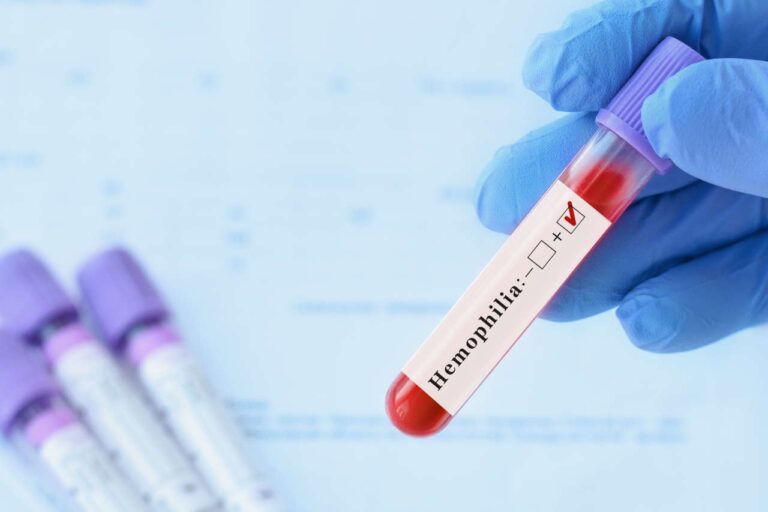




Đông máu là cần thiết để cầm máu và rất quan trọng trong việc chữa lành vết thương. Tuy nhiên, những người có bệnh máu khó đông không có khả năng sản xuất đủ lượng cần thiết của một số yếu tố đông máu nhất định và do đó, gây ra hậu quả về sức khỏe.
Bệnh máu khó đông là một rối loạn di truyền hiếm gặp khiến máu của người bệnh khó đông, gây đau đớn và các vấn đề sức khỏe nghiêm trọng.
IVIG có thể giúp ích gì?
Thông tin miễn phí về điều trị IVIG | Khó khăn trong chẩn đoán?Các loại bệnh máu khó đông
Theo Trung tâm Kiểm soát dịch bệnh, hai dạng phổ biến nhất của căn bệnh này là:
- Bệnh máu khó đông A (bệnh máu khó đông cổ điển) là tình trạng người bệnh không có đủ nồng độ yếu tố đông máu VIII (8)
- Bệnh Hemophilia B (bệnh Christmas) do nồng độ yếu tố đông máu IX thấp (9).
Tình trạng sau ít phổ biến hơn nhưng cả hai tình trạng đều có cùng triệu chứng.
Các triệu chứng là gì?
Các triệu chứng của bệnh máu khó đông phụ thuộc phần lớn vào mức độ thấp của các yếu tố đông máu: nhẹ, trung bình hoặc nặng.
Bệnh máu khó đông nhẹ
Người mắc bệnh máu khó đông thể nhẹ có thể không chảy máu thường xuyên hơn bình thường trong cuộc sống hàng ngày, nhưng họ có thể bị chảy máu kéo dài hơn bình thường sau phẫu thuật, điều trị nha khoa, chấn thương hoặc vết cắt sâu. Họ cũng có thể dễ bị bầm tím hơn so với người không mắc bệnh máu khó đông.
Bệnh máu khó đông mức độ trung bình
Người mắc bệnh máu khó đông mức độ trung bình có thể bị chảy máu sau những chấn thương nhỏ, phẫu thuật hoặc các thủ thuật nha khoa và đôi khi có thể bị chảy máu tự phát, đặc biệt là vào khớp và cơ. Những lần chảy máu này có thể không thường xuyên như ở bệnh máu khó đông nặng nhưng vẫn cần được điều trị kịp thời.
Bệnh máu khó đông nặng
Người mắc bệnh máu khó đông nặng có nhiều khả năng bị chảy máu nội tạng tự phát, đặc biệt là vào khớp và cơ. Những vết chảy máu này có thể gây sưng, nóng, bầm tím và đau dữ dội, và theo thời gian có thể dẫn đến tổn thương khớp mãn tính nếu không được điều trị kịp thời. Người mắc bệnh máu khó đông cũng có thể bị chảy máu cam thường xuyên, chảy máu kéo dài từ vết cắt, và đôi khi có máu trong nước tiểu hoặc phân.
Ai có nguy cơ và cách xét nghiệm
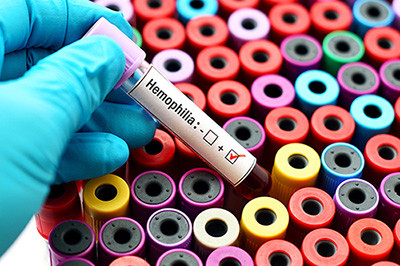
Bệnh máu khó đông thường do sự thay đổi (đột biến) trong gen quy định việc sản xuất yếu tố đông máu. Bệnh thường được di truyền và xuất hiện từ khi sinh ra. Vì gen này nằm trên nhiễm sắc thể X, nên bệnh máu khó đông phổ biến hơn ở nam giới. Phụ nữ mang gen này có thể được gọi là "người mang mầm bệnh", nhưng nhiều người mang mầm bệnh cũng có mức yếu tố đông máu thấp và có thể gặp các triệu chứng tương tự như bệnh máu khó đông nhẹ, chẳng hạn như rong kinh hoặc dễ bị bầm tím.
Nếu trong gia đình bạn có tiền sử bệnh máu khó đông, bao gồm cả phụ nữ được biết là người mang gen bệnh, điều quan trọng là bạn nên trao đổi với bác sĩ về việc xét nghiệm. Bệnh máu khó đông được chẩn đoán thông qua các xét nghiệm máu đo nồng độ các yếu tố đông máu và chức năng đông máu tổng thể. Trong một số trường hợp, xét nghiệm di truyền có thể được khuyến nghị để xác nhận chẩn đoán hoặc xác định người mang gen bệnh trong gia đình.
Các lựa chọn điều trị bệnh máu khó đông
Sau khi được chẩn đoán mắc bệnh máu khó đông, điều quan trọng là phải bắt đầu điều trị thích hợp càng sớm càng tốt.
Nhận hỗ trợ đồng thanh toán IVIG
Thông tin điều trị IVIG của bạn | Nhận ủy quyền trước cho IVIG- Điều trị theo yêu cầu: Những người mắc bệnh máu khó đông nhẹ có thể chỉ cần điều trị khi bị chảy máu. Việc điều trị thường bao gồm truyền yếu tố đông máu bị thiếu để cầm máu và ngăn ngừa biến chứng.
- Điều trị dự phòng (phòng ngừa): Những người mắc bệnh máu khó đông từ mức độ trung bình đến nặng thường được điều trị dự phòng thường xuyên, bao gồm truyền yếu tố đông máu theo lịch trình (ví dụ như vài lần mỗi tuần) để duy trì nồng độ đủ cao nhằm giảm hoặc ngăn ngừa chảy máu tự phát. Phương pháp này giúp bảo vệ khớp và cải thiện chất lượng cuộc sống lâu dài.
Quản lý cơn đau
Có thể cần dùng thuốc giảm đau để giảm bớt sự khó chịu do chảy máu khớp hoặc cơ. Tuy nhiên, một số loại thuốc—như aspirin và nhiều loại khác—không gây đau. thuốc chống viêm không steroid (Thuốc kháng viêm không steroid - NSAIDs) có thể ảnh hưởng đến chức năng tiểu cầu và làm tăng nguy cơ chảy máu. Bệnh nhân chỉ nên sử dụng các loại thuốc giảm đau được coi là an toàn cho người mắc chứng rối loạn đông máu và luôn luôn tham khảo ý kiến bác sĩ hoặc trung tâm điều trị bệnh máu khó đông trước khi dùng bất kỳ loại thuốc mới nào.
Các chất ức chế: Khi cơ thể từ chối điều trị
Khoảng 15%–20% người mắc bệnh máu khó đông A, và một tỷ lệ nhỏ hơn người mắc bệnh máu khó đông B, phát triển đột biến gen này. chất ức chế—Các kháng thể mà hệ thống miễn dịch tạo ra chống lại yếu tố đông máu được truyền vào. Các chất ức chế này ngăn cản việc điều trị hoạt động hiệu quả vì cơ thể “từ chối” yếu tố bổ sung. Khi các chất ức chế hình thành, bệnh nhân thường cần các phương pháp điều trị thay thế hoặc chuyên biệt, có thể phức tạp và tốn kém hơn. Việc theo dõi chặt chẽ bởi bác sĩ huyết học hoặc trung tâm điều trị bệnh máu khó đông là rất cần thiết để kiểm soát các chất ức chế và điều chỉnh liệu pháp.
Phần kết luận
Trong những năm gần đây, việc điều trị bệnh máu khó đông đã trở nên hiệu quả hơn rất nhiều, cho phép nhiều người mắc bệnh có thể sống khỏe mạnh, năng động và có cuộc sống hữu ích. Điều quan trọng là phải tìm cách điều trị sớm, tuân theo kế hoạch chăm sóc cá nhân hóa và phối hợp chặt chẽ với các chuyên gia để kiểm soát triệu chứng và ngăn ngừa biến chứng. Hãy hỏi bác sĩ của bạn về việc hợp tác với... Chăm sóc đặc biệt AmeriPharma® Để giúp quản lý bệnh máu khó đông. Các dược sĩ tận tâm của chúng tôi luôn sẵn sàng 24/7/365 để trả lời câu hỏi của bạn, điều phối thuốc và hỗ trợ bạn trong suốt quá trình điều trị.